Meet the Five Wealth Gods: The 5 Gods of Fortune in Chinese Folk Religion
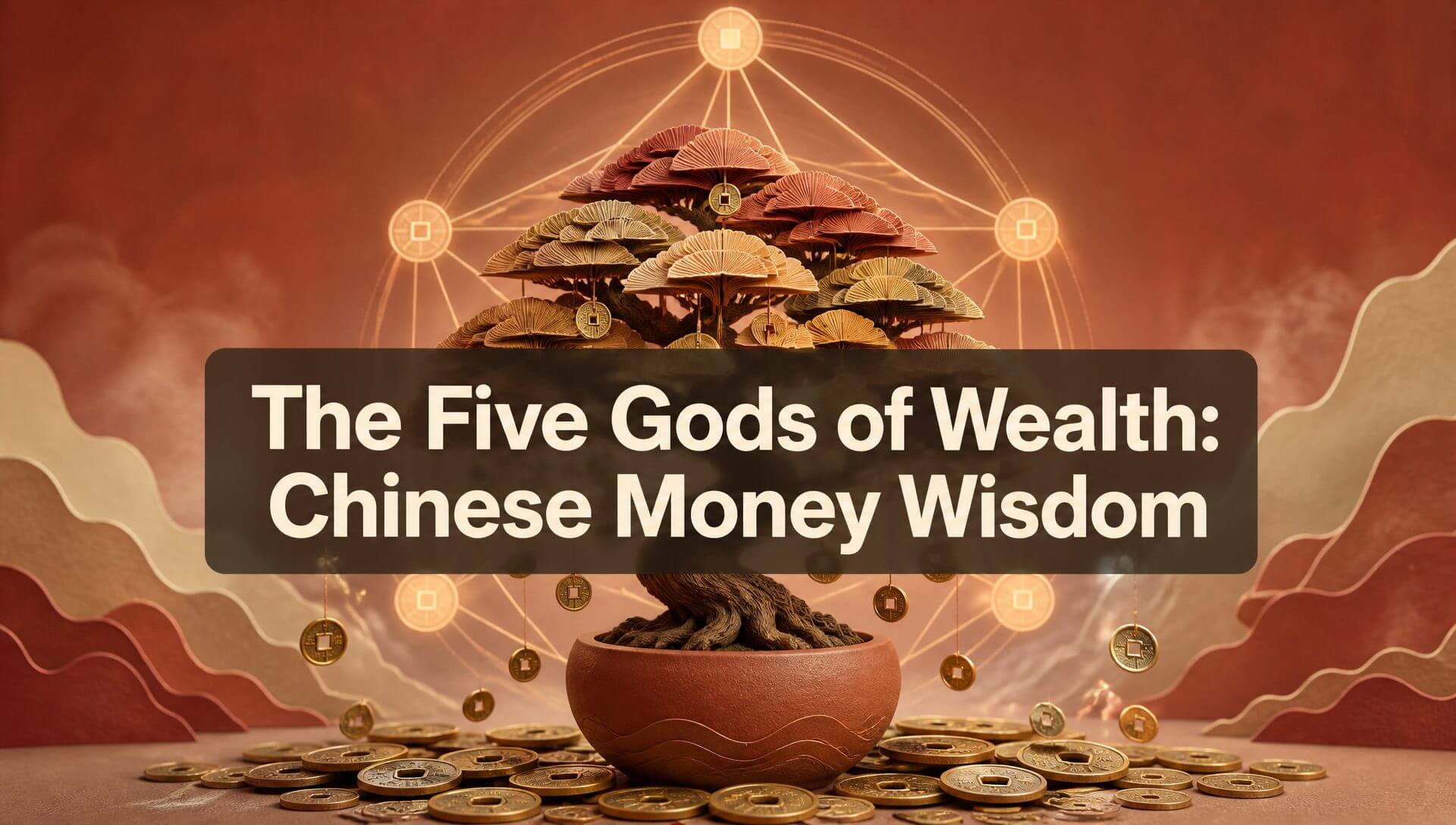
If you know Thor from Norse mythology, or you’ve spotted one of those waving cats parked next to the register in a Japanese shop, you already get how cultures give shape to things you can’t touch — luck, prosperity, the feeling that fortune’s got your back. Chinese folk religion went a different way. Instead of appointing one god of wealth, it appointed a whole roster. The group is usually called the five wealth gods: five figures with completely different origins and completely different personalities, each one responsible for a single face of wealth. And here’s the thing — the fascinating part isn’t the gods themselves. It’s that the division of labor tells you exactly how this culture understood where money actually comes from.
Why Five, and Not One
In the worldview of Chinese folk religion, the heavens aren’t one all-powerful presence so much as a sprawling bureaucracy. Every god holds an office, covers a territory, and answers for a defined portfolio — think federal agencies, each with its own mandate. Wealth was considered way too complicated for any single official to handle alone, so the job got split five ways.
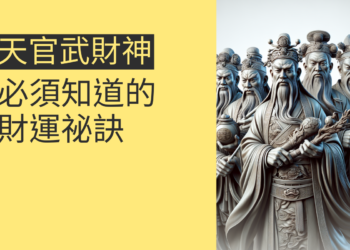
Those five portfolios line up roughly with five directions: center, east, west, south, and north. This “five directions” idea shows up all over Chinese culture — the five elements, the five colors, the five directions — a habit of mind that carves the world into fifths in order to make sense of it. So the five wealth gods aren’t just five deities. They’re a complete map of wealth: whatever direction your money comes from, whatever channel it arrives through, somebody’s in charge of it.
One thing worth saying up front: there’s no single authoritative list of the five wealth gods. China is enormous, local traditions run deep, and the lineup honored in one region or one century won’t quite match another. If you’re used to religions with a canon and a settled text, that can feel strange. But folk religion grows this way by nature — no central body ever issued the list. It accumulated slowly, in ordinary people’s homes and shops, with regions borrowing from each other along the way. The looseness of the list is a sign that it’s stayed alive.
The Civil and the Martial God of Wealth: Two Ways to Make Money
Of the five, the distinction people bring up most often is between the civil god of wealth and the martial god of wealth. The split is refreshingly intuitive. The civil god of wealth presides over money that comes from brains, calculation, and patient management — bookkeeping, trade, planning, negotiation. The martial god of wealth presides over money that comes from nerve, expansion, and carrying risk — striking out, placing a bet, holding your territory once you’ve won it.
Think of them as two different skill sets pointed at the same goal. Some people are built for consolidation and careful arithmetic; others are built for opening new ground. The system never declares one of them nobler than the other. Both got a god. In a society that once prized scholars and looked down on merchants, that’s a genuinely striking attitude — what people actually believed at street level was usually a good deal more generous than the official line.
Where Caishen Fit Into Traditional Life
For Chinese families in the past, especially families in business, Caishen, the Chinese god of wealth, wasn’t someone you thought about once a year. A shop typically kept a fixed spot for the wealth god’s image, and traditionally the owner would light a stick of incense before opening for the day. Less a request — give me money — than a daily act of gathering yourself: thirty quiet seconds before the chaos starts, to remind yourself how you intend to do business today.
The loudest stretch of the year was Lunar New Year. The fifth day of the first lunar month is traditionally considered the wealth god’s day, and in many places people were setting off firecrackers before sunrise, with merchants reopening their doors that morning in a ritual called “opening the market” (kai shi). The noise rolled down the whole street, one shop after another. That wasn’t only religious activity. It was an entire community announcing in unison that the new year had started and everybody was back to work.
Where the Five Paths Gods of Wealth Came From: Four Stories About Men Who Became Gods
Here’s the thing that makes the Five Paths gods of wealth (wu lu cai shen) worth a closer look: almost none of them started out as abstract deities invented to fill a slot. Most were real people, or at least figures told and retold in old legends, remembered for one particular quality, then pushed up into godhood over centuries of oral tradition. So if you want to understand what this belief is actually about, start with what these men did while they were alive. The reasons they got elevated are this culture’s answer to a question every society eventually asks — what kind of person deserves wealth?
Zhao Gongming: The Plague God Who Became the Central Martial God of Wealth
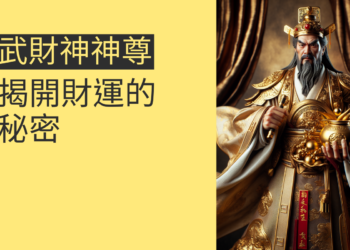
The figure at the center is usually Zhao Gongming, known as the central martial god of wealth, who holds the middle position and commands the other four. He’s easy to pick out of a lineup: black face, thick beard, riding a black tiger, iron whip in hand. Nothing about that image says “money manager.” He looks like a general. There’s a reason for that.
When Zhao Gongming first shows up in ancient texts, he isn’t a god of wealth at all. He’s a plague god, a terrifying figure presiding over disease and death. Getting from something people feared to someone people petitioned for money took more than a thousand years of gradual reinvention. By the time of the Ming dynasty fantasy novel Investiture of the Gods, he had been rewritten as a Daoist adept of formidable power, ultimately appointed to command subordinates responsible for attracting wealth, bringing in treasure, gathering valuables and drawing in profitable business. That’s the point where his identity as a god of wealth locked in for good.
The transformation itself is worth sitting with. A character who originally stood for catastrophe ends up guarding prosperity — which, in its way, reflects something people already sense: wealth and risk have always been two faces of the same thing, and the force that can wreck you is often the same force that can make you rich. Putting a figure that fierce at the center amounts to an admission that money is not a gentle business.
Guan Yu: The Man Who Put Credit Into the System
The other figure who turns up constantly in the group of five is Guan Yu, a real general from the Three Kingdoms era. And the reason he got folded into the wealth pantheon has nothing to do with warfare.
What sits at the core of Guan Yu’s image in Chinese culture is loyalty and honor: if he said he’d do something, he did it, even when the other side offered him better terms, even when keeping his word cost him. In the legends, an enemy treated him generously and dangled high rank and rich rewards in front of him, and he still insisted on returning to the lord he had originally served. That quality — saying it and then doing it — landed hard with later generations of merchants. In an age with no courts and no reliable system of contracts, whether a deal worked came down almost entirely to whether the person across the table was good for their word.
So merchants brought Guan Yu into their shops. What they were honoring wasn’t only a god; it was an industry-wide agreement about how business gets done: in this trade, your credit is worth more than anything else you own. Call him one of the world’s earliest brand ambassadors for commercial integrity. And the tradition runs straight through to today — plenty of shops across the Chinese-speaking world still keep a statue of Guan Yu by the register, even when the owner couldn’t tell you the story behind it.
Bigan and Fan Li: Two Versions of the Civil God of Wealth
On the civil side, the two names that come up most are Bigan and Fan Li, and they stand for two very different kinds of wisdom.
Bigan was a minister at the end of the Shang dynasty who angered a tyrant by speaking too plainly, and the legend has him executed by having his heart cut out. The logic that made him a god of wealth is peculiar: with no heart, he can have no partiality — so when wealth gets distributed, he’ll be perfectly fair and play no favorites. As a chain of reasoning, that’s a considerable leap. But what it’s reaching for is unmistakable. People want the god who handles the money to be impartial.
Fan Li represents the other model entirely. A strategist of the Spring and Autumn period, he helped King Goujian of Yue restore his kingdom, and then, at the exact moment of triumph, declined to stick around and enjoy the power he’d earned. He left, changed his name, and went into trade. He was spectacularly good at it — the stories say he built an enormous fortune three separate times and three separate times gave it away to the people around him and started over. He came to be called Tao Zhugong, and merchants regarded him as the founding patriarch of their profession.
Fan Li’s story carries the single most important idea in this whole tradition: he isn’t admired for how much he made. He’s admired for being able to make it and also able to let it go. That act of dispersing wealth comes back again and again in the sections ahead. It sits very close to the heart of the entire way of thinking about money here.
Three Traditional Customs, and the Ideas About Money Behind Them
Now that you know who these five figures are, the more interesting question is what people who believe in this system actually do. One thing to be clear about up front: what follows describes how these customs are traditionally practiced. It isn’t a suggestion that you take them up. The practices themselves aren’t really the point. What makes them worth your time is that each one carries a specific, concrete idea about money — and those ideas hold up just fine even if you strip the belief away entirely.
Welcoming the God of Wealth: Treating a Beginning as a Formal Event
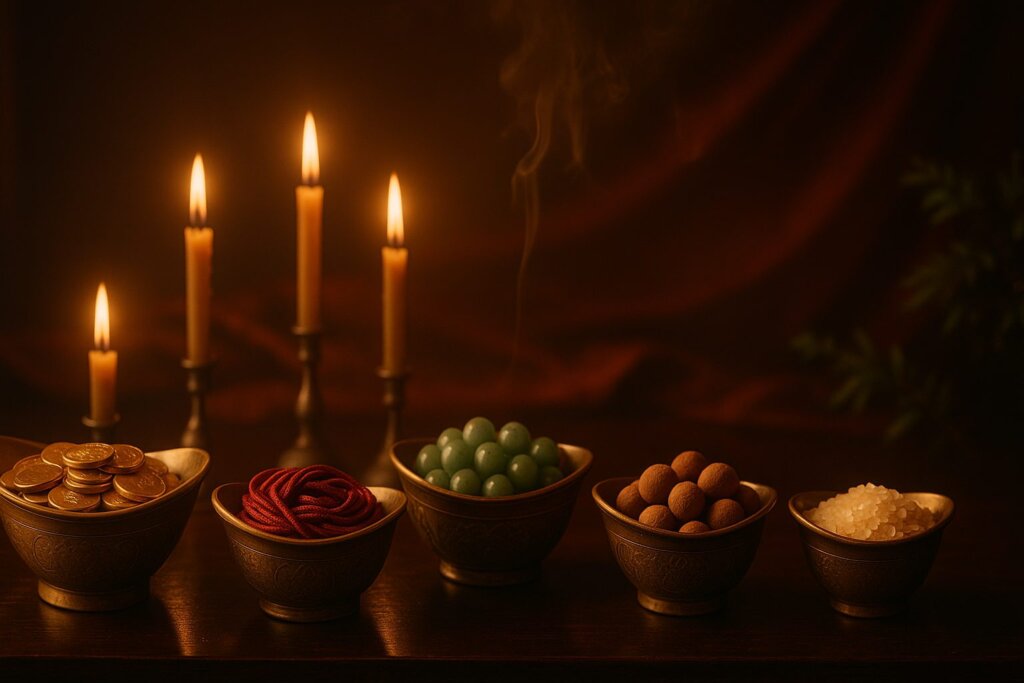
The fifth day of the lunar new year, when families and businesses go about welcoming the god of wealth, is the busiest moment of the year for these customs. Traditionally that means opening the doors at dawn, setting off firecrackers, and laying out offerings, with shops formally reopening for business that day. Some families give the whole house a deep cleaning first, on the reasoning that you have to clear out what’s old and stagnant before there’s room for anything new to show up.
Take the religious wrapping off and here’s the idea underneath: a new financial cycle deserves to be marked, deliberately and out loud. It’s remarkably easy to drift into a new year — to start working again without having thought about anything at all, then finish twelve months later in exactly the same fog. A ritual with noise, with movement, with the whole family or the whole shop taking part, forces you to stop and register that a new stage has started.
That’s the same thing modern people are doing when they set annual goals, run a year-end financial review, or write out a plan on January 1. The only real difference is that the traditional version is collective, physical, and very hard to dodge. When the entire street is setting off firecrackers, you can’t pretend today is just another day.
Offerings and Incense: A Device for Managing Attention
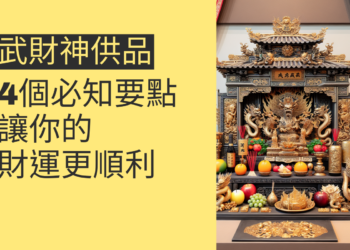
Making offerings to Caishen traditionally involves setting out some food along with incense, and the specifics vary a great deal from region to region. On the surface, this looks like presenting gifts to a deity. But ask an older relative why it’s done, and the answer usually isn’t transactional — it’s closer to “it shows you mean it” or “it shows respect.”
That distinction matters. The transactional version of the thought is “I give you this, you give me money.” The traditional framing is much nearer to “I use this act to reset my own state of mind.” For the few minutes the incense is burning, you can’t scroll your cell phone, you can’t talk, you can only stand there. For a shop owner who’s busy from morning to night, that may be the only stretch of enforced quiet in the entire day.
More striking still is that within this framework, the expense of the offerings barely matters. A poor household putting out a bowl of plain water and a single simple dish is considered no lesser than a lavishly loaded table. That’s a genuinely gentle piece of design — it keeps the act of hoping for prosperity from turning into one more contest over who can spend the most. Sincerity costs nothing, and for anyone who can’t afford the expensive version, that amounts to real equality.
Giving and Circulation: The Most Counterintuitive Part of the Whole Belief
If you take away only one thing about the Five Paths gods of wealth (wu lu cai shen), let it be this. In this system, wealth is understood as an energy that moves, not as a static substance you can pile up. In the traditional phrasing, what Caishen gives you isn’t money but money energy — the idea that wealth behaves like a current rather than a pile, a condition in which money has the chance to happen.
And the rule governing money energy is that it has to flow out before it can flow back. Whatever you clamp down on and refuse to move goes stagnant, and what stagnates disappears. So within this logic, Caishen’s willingness to share money energy with a particular person is read as an act of trust — the expectation being that you’ll put that energy to good use and send it back out in one form or another. Only when you pass along what you’ve received does a positive loop form, and that loop grows the way a snowball does.
The point most easily misunderstood here is what sharing actually means. It doesn’t mean that earning a hundred dollars obliges you to give ninety of it away. The traditional reading is far broader — what matters is keeping the energy in motion, and that can take many forms:
- Passing along the genuinely useful ideas you’ve picked up to the people around you
- Spending your time doing something that actually helps someone, rather than only writing a check
- Giving someone a hand while they’re just starting out and have no way yet to pay you back
Of all these forms, the one traditionally considered most valuable is sharing ideas and methods. The reasoning runs like this: if someone becomes wealthy because of something you passed on, some portion of that comes back around to you over the course of the cycle — not because they’re overflowing with gratitude, but because you’re standing inside a network that keeps getting richer, and that lifts you along with it.
Chinese folk religion has a vivid way of putting this — worth knowing not as a financial rule, but as a cultural lens on wealth. To these gods, simply being rich yourself isn’t impressive. Before they became deities, the people they dealt with were the wealthy; a rich person who looks out only for himself is nothing they haven’t seen a thousand times. The person who lifts the people around him up along with himself is the one worth investing in — because putting a dollar into anyone else might return fifty cents, while putting a dollar into you returns ten. And when Caishen sees your money energy compounding, the natural thing to do is put in more.
Back to You: Three Things This Tradition Still Has to Say
Here’s the thing — you don’t have to believe five deities are up there splitting the compass between them to get something out of a body of ideas that’s been kicking around for centuries. The way a culture pictures wealth is, at bottom, the residue of what that culture spent a long time watching. The packaging is mythological. What’s underneath is a set of very practical claims about how people behave around money. The three ideas below are the parts of this tradition that hold up best.
One: Treat Your Credibility as an Asset
When Guan Yu got brought into the wealth pantheon, an entire merchant class was basically casting a collective vote: keeping your word is the most valuable capital in this business. That hasn’t aged a day. It’s only changed shape. Your credibility doesn’t travel by village reputation anymore — it travels through reviews, referrals, repeat customers, and what people say about you when you’re not in the room.
The ordering is the interesting part. Guan Yu didn’t earn his spot by winning battles. He earned it by honoring an agreement at a moment when he had a better option sitting right there. That points to a specific test: what your credibility is worth isn’t measured by how reliable you are when things are going your way, but by whether you hold to the deal when holding to it costs you.
Two: Money Has to Move
The idea that money energy needs to circulate translates cleanly into modern terms: pure hoarding produces nothing. Money that sits still doesn’t grow, and it doesn’t build you a single relationship along the way.
This isn’t an argument against saving — saving obviously matters. It’s an argument against treating the accumulated number as the only goal, because if you do, you miss everything that only happens through movement: compounding on what you’ve invested, opportunities that circle back from people you once helped, the network that grows out of knowledge you gave away. This tradition treats dispersing and gathering as two halves of one motion rather than two opposing choices. Fan Li giving away his entire fortune three times and rebuilding it three times is exactly that point in story form — he could afford to let go because he understood that his capability lived in his head, not in his strongbox.
Three: Rich Alone Isn’t Rich
Probably the most surprising thing about the Five Paths gods of wealth (wu lu cai shen), for a modern reader, is the attitude that getting rich by yourself isn’t especially impressive. In a culture that treats individual success as the highest achievement going, that sounds close to backwards.
But the reasoning behind it is thoroughly practical. How wealthy you can get depends heavily on how wealthy the network around you is. If everyone near you is struggling, your opportunities are limited, your potential partners are limited, and your customer base is limited. If everyone near you is doing better, you find yourself brushing up against more possibilities without doing anything extra. So “help other people get rich too” isn’t a moral demand. It’s self-interest with a longer time horizon.
It’s also why, within this tradition, sharing knowledge ranks above handing over money. Money solves a problem once; a method changes the trajectory of someone’s next several decades — and you’re going to be living inside the environment those people build. Seen that way, the Five Paths tradition has been making the same argument all along: wealth is a network phenomenon, not a personal achievement. How you think about that may say more about where you’ll be in ten years than the number currently sitting in your bank account.
5 Common Questions About the Five Paths Gods of Wealth
When you run into an unfamiliar belief system, the thing that trips you up usually isn’t the big philosophical claims — it’s the concrete stuff. Were these gods actual people? Why does every source hand you a different list of names? Is it weird to study this if you don’t believe a word of it? Here are the five questions that come up most, answered straight, so you walk away with a reasonably complete picture of the tradition.
Were the Five Paths gods of wealth real people?
Some were, some weren’t, and that mix is exactly what makes Chinese folk religion interesting. Guan Yu was unquestionably a real person — a famous general of the Three Kingdoms era, fully documented in the official histories, who died in 220 CE. Fan Li was also a real historical figure, an advisor to King Goujian of Yue at the end of the Spring and Autumn period who later went into business and made a fortune. Bigan appears in accounts from the end of the Shang dynasty; the details around him have picked up a good deal of legend over the centuries, but he’s generally accepted as a historical person.
Zhao Gongming is a different story. He first shows up in Daoist texts from the Wei and Jin period, where his job was presiding over plague — not as a historical figure with birth and death dates. His identity as a god of wealth only settled into its familiar form after the Ming dynasty novel Investiture of the Gods caught on.
So this group is a blend of historical people and mythological characters. That’s extremely common in Chinese folk religion — a real person gets singled out for some quality people valued, and then a few hundred years of accumulated storytelling gradually grows a divine identity around him. Rather than asking whether they were real, the more useful question is why people picked these particular figures. That one tells you far more.
Why does the list of Five Paths gods of wealth change from place to place?
Because Chinese folk religion has no central authority to certify an official version. Unlike traditions with a scripture, a church, and councils that settle doctrine, this one grew organically out of everyday life in a lot of different places at once.
The upshot: Zhao Gongming as the central path is close to universal, while the other four are pretty flexible. Different regions filled those slots according to local historical memory, the industry that dominated the area, or even the legend surrounding a particular local notable. A coastal region built on maritime trade might elevate certain figures; an inland farming region would land on a different lineup entirely. Even within one place, the Ming dynasty list and the Qing dynasty list might not match.
If you’re used to belief systems with clearly defined doctrine, that fuzziness can feel unsatisfying. But flip it around and it tells you something: this is a living tradition, maintained collectively by the people who actually use it. A flexible list means it has kept responding to real needs in real lives, instead of being frozen in place by a text.
Is there any connection to Japan’s lucky cat or the Seven Lucky Gods?
There’s an indirect relationship, but they aren’t the same thing. Several of Japan’s Seven Lucky Gods do trace back to Chinese and Indian belief, arriving with Buddhism and cultural exchange and then getting localized into new forms. That’s why you see the same structural idea across East Asia: a set of gods who divide up responsibility for good fortune and wealth.
The specific roster of the Five Paths gods of wealth, though, is thoroughly Chinese — Guan Yu and Fan Li especially are bound tightly into Chinese historical narrative. As for the lucky cat, that image developed in Japan after the Edo period and has no direct line of descent from the Five Paths gods at all.
The more interesting observation is that these traditions share a conceptual instinct: none of them treats wealth as pure luck. All of them tie it to some virtue or behavior. Most lucky cat legends turn on repaying a kindness; the Five Paths gods emphasize credit and circulation. That intuition — that wealth and character are linked — keeps resurfacing across East Asia.
I don’t believe any of this. Is there a point in reading it?
Plenty of people come at it from exactly that angle. You can treat folk religion as a database of social experience that’s been stress-tested over a very long time. What it records is what one culture concluded, after several centuries of watching who got rich and who blew it, about the patterns behind each outcome — packaged in the language of gods and stories.
Strip the packaging off and what’s left is pretty practical: credit is a compounding asset, hoarding doesn’t create value, helping the people around you do better comes back to you, and starting something is worth marking with some ceremony. Those claims wouldn’t look out of place in a modern business book. The difference is that the traditional version travels as story, which makes it memorable and easy to pass along.
Beyond that, understanding how a culture thinks about money is a shortcut into understanding the culture itself. What you find here is an attitude toward wealth that’s neither above it all nor greedy — it concedes that people want money, and at the same time insists that you put it toward the right things. Figuring out where that balance sits is worth some thought on its own.
What’s the difference between “money energy” and just saying “money”?
This is the distinction that unlocks the whole system. Money is what you already have: countable, static, sitting there. Money energy is understood as something that hasn’t taken shape yet — a condition in which good things are more likely to happen.
Here’s a modern analogy: money energy is close to opportunity flow. The people you know, the impression others have of you, the projects currently in motion, the reputation you’ve built — none of that is money, but all of it determines whether money shows up. A person can have very little in savings and abundant money energy, because there’s a lot of possibility moving around them. Someone else can have a healthy balance and nothing new happening at all.
The reason this distinction matters is that it changes the answer to “what should I be doing?” If your goal is money, you concentrate on protecting what you already have. If your goal is money energy, you concentrate on keeping things in motion — maintaining relationships, sharing continuously, letting things come in and go back out. Traditionally, the gods of wealth are said to be watching the second thing, not the figure in your account. Seen that way, what this tradition is really about isn’t how to ask for wealth. It’s how to keep yourself in the position where things tend to happen.