Who Is the Martial God of Wealth? A Beginner’s Guide to the Deity Who Governs Money (3 Key Ideas)
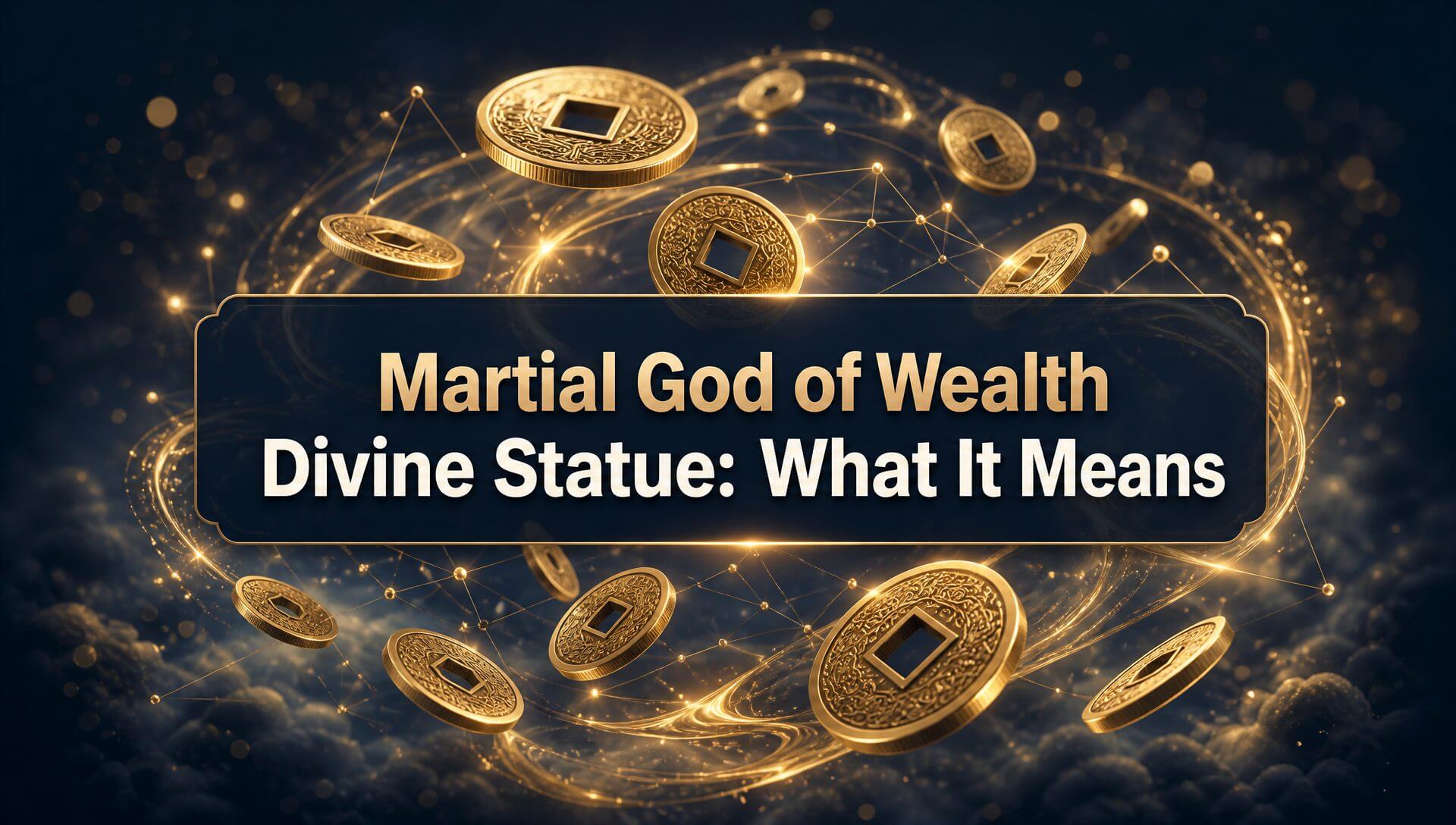
If everything you know about Chinese culture comes from kung fu movies and Lunar New Year parades, then Caishen, the Chinese god of wealth, is probably a name you’ve never run into. Here’s the short version: he’s a figure in Chinese folk religion believed to govern where money flows, and his best-known form is the one called the martial god of wealth. To understand him, you have to drop the assumption that you’re looking at religious doctrine. Chinese folk religion works less like a creed and more like a way of living — closer to everyday life than you’d expect.
1. Folk religion is a philosophy of living, not a denomination
Chinese folk religion has no founder, no catechism to pass, no moment where you sign up and become a member. It’s closer to a philosophy of daily life built up over generations, packaged in the form of deities. The same person might make offerings to their ancestors at home one day, stop by a temple to say a few words to Caishen the next, and attend a Buddhist ceremony the day after that. Nobody there finds that contradictory.
So when you see someone speaking to a statue of the martial god of wealth, the scene has more in common with giving a respected elder an update on how life is going than with prayer in the Western sense. What people believe in isn’t only the deity’s power but the values he stands for — fairness, keeping your word, competence, a willingness to look after others. The deity works as a set of values given a face, turning abstract principles into someone you can stand in front of and talk to.
2. Why there’s a “civil” god of wealth and a “martial” one
There’s more than one god of wealth, which trips up almost everybody the first time around. Tradition sorts them into two broad categories, the civil god of wealth and the martial god of wealth, and the division of labor is refreshingly plain. The civil god of wealth is associated with money that accumulates steadily — a salary, a stable job, income that arrives like a slow, reliable stream. The martial god of wealth is associated with money you have to go out and take: the kind that takes nerve, drive, and a certain appetite for risk. Business deals, negotiations, staking out new territory.
The categorization itself is the interesting part. It reflects a recognition that making money isn’t one skill. Holding steady and going out to win market share call for two different temperaments. That’s why business owners, salespeople, and shopkeepers have traditionally been the ones who interact with the martial god of wealth, while people on a fixed salary hoping for a smooth career lean toward the civil god of wealth. Think of it as an early, unpretentious taxonomy of the different kinds of wealth.
3. Black face, riding a tiger, holding a golden whip: what the statue’s details are saying
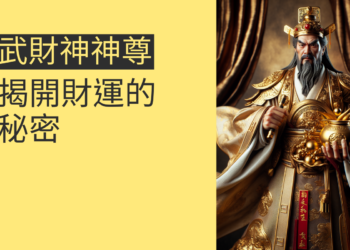
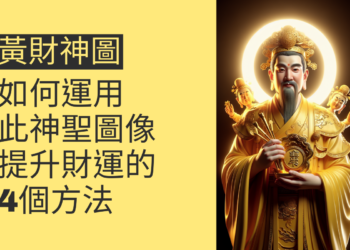
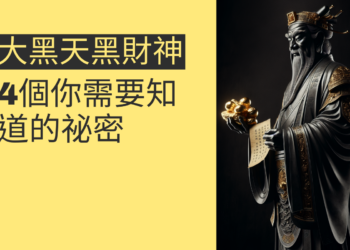
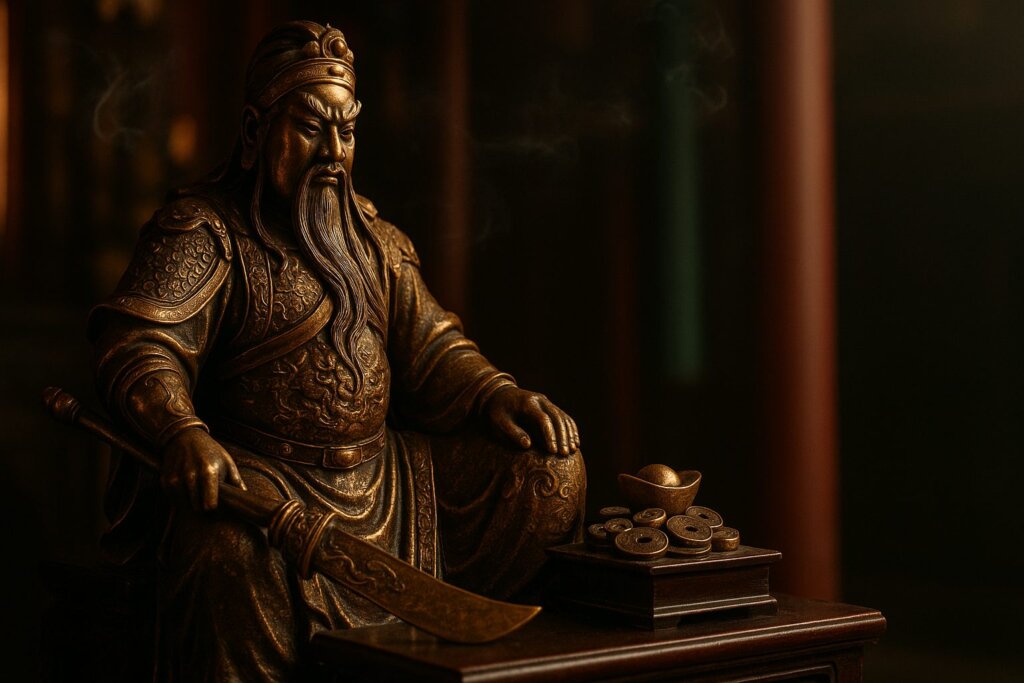
The martial god of wealth is easy to spot: a black face with a heavy beard, a suit of battle armor, a black tiger for a mount, and usually either a golden whip or a gold ingot in his hand. None of that matches what you’d intuitively associate with wealth — he looks a lot more like a general than a banker. And that’s exactly the point.
In the visual vocabulary of traditional Chinese opera and painting, a black face signals uprightness and incorruptibility, someone who can’t be bought. The tiger stands for authority and the power to guard what it protects. The golden whip carries a note of punishment — he doesn’t merely hand out money, he also rules on who shouldn’t be receiving it. Put it all together and the message of the statue is that wealth is being handed out by a figure who cares intensely about fairness. The design isn’t meant to frighten anyone. It’s meant to remind whoever looks at it of one thing: if you want money, first make sure you can stand behind how you got it.
How Does a Mortal Become a God of Wealth? Three Turning Points in the Story of the Martial God of Wealth
Here’s something almost every deity in the Chinese pantheon has in common: he started out as a regular person. That’s a very different setup from Greek or Norse mythology, where the gods are gods from page one, and it’s the key to understanding Chinese folk religion. Becoming a god is a posthumous promotion — society’s final verdict on what kind of character someone had. The story of the martial god of wealth is that logic at its clearest.
Turning Point One: From a Recluse in the Mountains to a Soldier on the Battlefield
The figure widely regarded as the original martial god of wealth is Zhao Gongming, and the earliest accounts describe him as a Daoist adept practicing in the mountains. Money didn’t enter into it at all. In those stories he lives plainly and austerely, absorbed in alchemy and cultivation.
In the version that traveled the furthest — the Ming dynasty novel Investiture of the Gods — he’s called down from the mountains to fight in a war that topples one dynasty and installs another. He ends up on the losing side, and he’s killed in the fighting. Up to here, it’s a tragedy: a man with no real stake in any of it gets pulled into somebody else’s power struggle, and it costs him his life.
Turning Point Two: Posthumous Investiture, and the Job of Managing Money
What happens next is the interesting part. When the war ends and the victors sit down to assign honors to the dead, they don’t strike his record for backing the wrong side. Instead they put him in charge of the world’s sources of wealth, with four subordinate generals under him, each governing money coming in from a different direction — together, the Five Paths gods of wealth (wu lu cai shen).
Why him? The story’s answer is that he never played favorites, he kept his word, and he wouldn’t bend right and wrong to match whichever side he happened to be standing on. Buried in that arrangement is a very Eastern idea: the qualification that matters most in someone who handles money isn’t skill at making it, but immunity to being moved by it. Put a greedy person in charge of distributing wealth and the whole system collapses. Put someone who can’t be swayed in that seat, and the position earns credibility.
Turning Point Three: From Myth to Social Consensus
The myth is only the starting point. What actually gave the martial god of wealth his lasting foothold was the next several centuries, during which merchants adopted him as the shared spiritual emblem of their trade. Business in premodern China ran heavily on verbal promises and networks of personal obligation. No credit bureaus, no background checks — and a reputation for not keeping your word was enough to push you out of the market entirely.
So a god known for fairness became a form of collective moral collateral: we make offerings to the same god, the one who stands for keeping his word, so I’m not going to cheat you. That’s a remarkably clever piece of social engineering — using a shared belief to patch the trust problem that institutions couldn’t yet solve. Once you see that layer, it’s clear that wealth-god traditions were never only about asking for money. They were also holding together the basic ethics a commercial society needs in order to function.
What People Traditionally Do: 3 Core Ideas Inside Wealth-God Culture
Here’s the part worth slowing down for. The customs are just the outward motions — the value is in the thinking underneath them. Traditionally, people interact with the martial god of wealth in all kinds of ways, but strip away the ceremonial details and you’re left with a handful of ideas that keep surfacing. And those ideas hold up whether or not you believe a deity is involved at all.
Idea One: Money Energy Has to Move — Cash That Sits Still Doesn’t Grow
There’s a claim sitting at the center of this tradition: when Caishen shares money energy with you, that’s an act of trust, not a handout. What he’s said to expect is that you’ll put the resource to good use and then send it back out. So after a windfall, some families deliberately set aside a portion and do something with it — pick up the check at dinner, help out a relative or a friend who’s in a tight spot, get involved in something happening around the neighborhood.
Worth being clear about: the traditional idea was never “earn a hundred dollars, give away ninety.” That’s a common misreading. What matters is whether the energy went back out at all, not how big the percentage was. Volunteering your time counts as circulation. So does passing a useful idea along to someone who needs it.
Put in modern terms, that’s a pretty practical point. Wealth is fundamentally about exchange and circulation, not accumulation. Money parked in one place is just a number. Money that goes out and comes back as relationships, skills, opportunities, or goodwill is money that can grow into something larger. It’s the same thing people mean now when they talk about compounding, or about relationships as capital.
Idea Two: The Best Thing You Can Share Is the Method
In this framework, sharing comes in tiers — and the tier considered most effective isn’t giving money. It’s giving ideas. When you hand the people around you an approach you’ve learned and tested, and they end up better off because of it, that kind of sharing is understood to create a positive loop: because they improved through you, some part of that improvement flows back your way.
The mechanism sounds mystical until you take it apart, and then it’s just how the world works. Teach someone how to do the job, and when they succeed, you’re the first person they think to work with. Help someone through a rough stretch, and their resources tend to come your way first later on. The difference between giving a fish and giving a fishing rod is the difference between a one-time expense and something that grows into an entire net.
Idea Three: Getting Rich Alone Isn’t Impressive — Bringing People With You Is
Here’s the most counterintuitive line in all of wealth-god culture, and the most interesting one: as far as Caishen is concerned, the fact that you personally have money is nothing special. The traditional explanation is that these gods spent their pre-divine lives moving among wealthy people already, so plain wealth holds no appeal for them. What makes them willing to add to your share is being the kind of person who helps other people get wealthy too.
The comparison behind it is blunt. Put a dollar into someone else and you might get fifty cents back; put a dollar into you and it comes back tenfold, because you take resources, magnify them, and push them outward. So when people talk about the snowball getting bigger and bigger, what’s rolling isn’t your money alone — it’s the water level of the entire circle you’re standing in.
This layer may be the single most usable thing a tradition several centuries old has to offer someone living now. It reframes “asking for wealth” from taking into responsibility: money ends up in your hands not because you’re better at grabbing it, but because other people believe you’ll use it well and keep it moving. You don’t have to believe there’s a god riding a black tiger watching you to admit the standard is a sound one — how far a person goes usually has less to do with how much they’ve held onto than with how much they’ve gotten into motion.
Five Questions People Ask Most About the Martial God of Wealth
If this is your first run-in with the tradition, a few questions tend to pop up right away: Is this a religion? Can you engage with it if you don’t believe? Does making offerings actually bring money in? Here are the five that come up most. The answers lean toward how people have traditionally understood these things rather than what you ought to do, because none of it asks you to join anything in order to make sense.
Q1: Is the martial god of wealth the same idea as Japan’s lucky cat or Japanese wealth gods?
Not the same, though they’re cultural cousins. Japan’s lucky cat showed up in the Edo period as a shop mascot. It has no clear divine status and no life story behind it, which makes it closer to a symbol than a figure. The martial god of wealth is a deified human being with a name, an origin and a documented record of deeds, and behind him sits a whole narrative about fairness and credit.
Japan also developed its own roster of wealth deities, including Ebisu and Daikokuten among the Seven Lucky Gods, and several of those figures arrived from Chinese and Indian religious traditions before being localized. So the wealth deities across East Asia do carry traces of mutual influence. Each one still grew into a distinct shape with its own emphasis.
Q2: If I don’t believe in deities, is there anything here for me?
Yes, and probably more than you’d expect. You can read the whole thing as a wealth ethic wrapped in story form. Strip away the divine packaging and what’s left is a set of pretty durable claims: money grows only when it moves, credit is the foundation of long-term return, someone who helps other people make money rarely ends up doing badly, and hoarding should never be mistaken for being rich.
Drop any of those into a modern personal finance or business book and nothing would look out of place. The only difference is that people in earlier centuries picked a tiger-riding general to carry the lesson, because in an era of low literacy a story traveled farther than a bulleted list of rules. You don’t have to accept that he exists to accept the standard of judgment he stands for.
Q3: Do Chinese people treat deities like wish-granting machines, paying for favors?
That’s a common misreading. On the surface people do prepare offerings and state what they want, and sure, it can look transactional. But in the traditional understanding it works more like a declaration than a purchase — the act is how you say your situation and your resolve out loud, and it reminds you that some commitments, once spoken, have to be honored.
More important, the tradition puts heavy weight on returning thanks once something works out. People believe you have to come back and express gratitude, and you have to pass some of what you received along to others. So the center of gravity in the whole cycle actually sits in the second half — in what you do after you get it, not in the asking that came first. Wanting to take without ever giving is, within this value system, treated as the most dangerous position of all.
Q4: How do people decide between the civil god of wealth and the martial god of wealth?
The traditional split is refreshingly practical: it looks at the nature of your income. If your money comes from a stable position and a steady paycheck, and what you need is to avoid mistakes over a long stretch, that leans toward the civil god of wealth. If your money requires you to go out and get it — pitching deals, running a store, working sales, building a business, all of it uncertain and competitive — that’s the territory of the martial god of wealth.
In practice, though, almost nobody picks just one side, because most people’s income mixes both kinds at once. Treat the distinction less as a rule and more as a prompt: figure out first which kind of money you’re actually earning, and whether what you need right now is the discipline to protect it or the nerve to go expand it. That inventory alone is worth taking.
Q5: Is this tradition still alive in Chinese society today, or is it mostly tourism now?
It’s far more active than most outsiders assume. In Taiwan, Hong Kong, Chinese communities across Southeast Asia and many regions of China, welcoming the god of wealth during Lunar New Year is still a genuinely mass-scale event, and the ritual businesses hold before reopening for the year is still routine. Modernization didn’t push it aside. It just coexists with modern life.
The more accurate description is that its character has shifted. For some people it’s serious faith. For a great many more it’s a cultural habit, a reason for the family to gather, a psychological ritual you give yourself at the start of a new year. Not every Westerner believes in Santa Claus, and Christmas still carries real emotional weight — the way these two things exist is remarkably close.