Three Ideas That Explain Who the Five Paths Gods of Wealth Are
If the Five Paths gods of wealth (wu lu cai shen) are new to you, here’s the trap most American readers fall into right away: picturing something familiar, like a single deity running the universe’s money department. That’s not how this works. In Chinese folk religion, wealth was never one figure’s assignment. It’s the result of a group of deities working different parts of the same problem. So drop the assumption that a god is a wish-granting machine, and start with three basic ideas instead. Everything else gets a lot clearer after that.
First, Caishen isn’t one god — he’s a whole department
The pantheon of Chinese folk religion is built very differently from a monotheistic faith. Picture less a throne and more a sprawling bureaucracy: someone handles the weather, someone handles exams, someone handles childbirth, someone handles the kitchen stove. Each one has a defined portfolio, and they answer to one another in a chain of rank. Caishen, the Chinese god of wealth, is the office that covers finances.
The Five Paths gods of wealth, then, are a chief deity plus four subordinates — five figures who between them cover east, south, west, north, and center. Think of it the way you’d think of a company’s finance department. There isn’t just a CFO; there are people running purchasing, inventory, receivables, and sales. The reasoning behind the setup is that money was never assumed to come from one direction, so all five directions need somebody watching them.
Second, what they govern are the roads, not the vault
The word “paths” is doing real work in that name. Traditionally, what people asked for wasn’t “give me a sum of money” — it was “keep my roads to money clear.” Those are very different requests. One asks for an outcome. The other asks for a channel.
So within this framework, the Five Paths gods of wealth aren’t the figures who hand you cash so much as the ones who clear obstacles out of the road ahead of you. Whether a deal closes, whether customers walk through the door, whether an opportunity finds its way to you — all of that counts as a “path.” The money itself is almost beside the point. How money moves toward you and away from you is what this tradition actually cares about.
Third, “five directions” is a way of saying “all of them”
Why five, specifically? In Chinese culture, five is the number that signals completeness: the five elements, the five directions, the five flavors, the five colors. Any time the idea is “everything is covered, nothing got left out,” five is the number that says it.
Which means the “five” in Five Paths gods of wealth is less arithmetic than figure of speech. What it’s really claiming is that every direction your money could come from has someone looking after it. Once that clicks, you stop getting hung up on exactly which five deities belong on the list — the lists genuinely do vary from region to region, but the sense of comprehensiveness behind them is the same everywhere.
Two Origin Stories: How the Five Paths Gods of Wealth Went from Men to Gods
Here’s something worth knowing about Chinese folk religion: a lot of its deities started out as actual people, or at least as figures from legend, and got “promoted” to godhood on the strength of some virtue or accomplishment. The Five Paths gods of wealth (wu lu cai shen) came up the same way. By more than one route, though. The two stories don’t line up neatly, and in places they flatly contradict each other. That’s part of what makes folk religion interesting — it was never in the business of producing a single correct answer.
Story One: A General and His Four Officers
The most widely told version centers on a figure named Zhao Gongming. In the legend he began as a recluse, off in the mountains cultivating the Dao, until he got pulled into the great upheaval of the Shang-to-Zhou transition. He backed the losing side and died on the battlefield. So far, nothing about this sounds like a god of wealth.
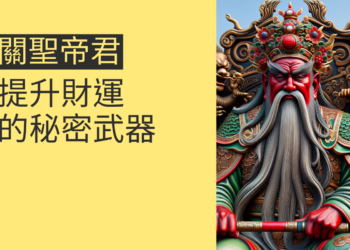
The turn comes afterward, in the investiture of the gods. Taking stock after the war, the winning side didn’t simply write off the defeated commanders. Each one was reassigned a post suited to what he was actually good at, and Zhao Gongming was made the god in charge of the wealth reservoir. The interesting detail is that he came with a staff of four, whose titles translate roughly as Summoning Treasure, Receiving Valuables, Attracting Wealth, and Profitable Trade: one finds the treasure, one takes it into storage, one brings in the customers, one closes the deal at a profit. The chief plus his four officers is the most common lineup you’ll see for the Five Paths gods of wealth.
Look at those four titles together and you’ll notice they lay out the full cycle of a business: source the goods, stock them, draw the buyers, make the sale. This isn’t an abstract blessing. It’s a concrete commercial workflow with a god assigned to each step.
Story Two: Five Local Deities
The second thread is hazier, and a lot more grassroots. Parts of southern China carried a tradition of deities that came in sets of five, with no necessary connection to money at first. Some of them had a distinctly menacing streak — the kind of local spirits you treated well because the alternative was trouble.
Over time, as regional economies improved, the reputation of these five got gradually laundered into something friendlier: gods who kept business booming. Eventually that thread merged with the general’s, and both ended up filed under the same name.
This pattern — deities from unrelated sources getting consolidated into one group — is extremely common in folk religion. What it really reflects is ordinary demand. People needed a god who handled money, so the candidates scattered across different regions were slowly sorted, combined, and standardized into one. A god’s résumé, to a surprising degree, gets written by the people using it.
Three Traditional Practices, and the Thinking Behind Them
Here’s the thing about how people have traditionally treated the Five Paths gods of wealth (wu lu cai shen): none of it is a set of instructions for you to follow. Each practice just happens to carry a pretty practical view of life underneath it. And that’s what makes them worth a look — you can disbelieve in the deities entirely and the reasoning still holds up once you take it apart.
One: Opening for Business on the Fifth Day, a Ritual About Restarting
Lunar New Year comes with a long list of things people avoid: no sweeping, no needlework, no talking business. Traditionally all of those restrictions lift together on the fifth day, a moment known as “breaking the five” (po wu), and it’s also the day many shops reopen their doors. Some families and business owners mark it with offerings and firecrackers, making as much noise as they possibly can while they welcome the year’s money into the building.
The idea underneath it is rhythm. Nobody runs at full intensity forever — you need a clearly marked stretch of downtime, and you need an equally clear signal that the restart has happened. That’s what a ritual does. It turns an abstract point on the calendar into an event your body actually remembers. When you write out goals on New Year’s Day or rebuild your plans on your birthday, you’re running the same mechanism.
Two: Borrowing and Repaying, a Lesson in Credit
In some regions there’s a custom of “borrowing” a small symbolic sum from the god of wealth and carrying it home as seed money. A year later, once business has picked up, you return it with interest — and usually a bit more than the interest strictly requires.
The most telling detail is that the amount borrowed is tiny. Far too small to function as real capital for anything. So the point clearly isn’t the money. It’s the act of paying it back, and paying it back handsomely.
Traditionally, people believed the god of wealth wasn’t tracking how much you earned but whether you kept your word. Settle up generously this year and there’s something to borrow next year. That’s credit in its most basic form — your credit isn’t a number a bank assigns you, it’s the thing you build one kept promise at a time. Drop the same idea into modern life and the answer doesn’t change: whether you can get resources next time usually depends on how you handled them last time.
Three: Money Energy Has to Move, and Sharing Is What Grows It
This may be the most counterintuitive piece of the whole tradition, and the one most worth knowing. The traditional framing goes like this: when the god of wealth sends money energy your way, that itself is an act of trust — the expectation is that you’ll put it to good use and pass some of the benefit along through your own generosity. Money energy isn’t given to you to store. It’s given to you to move.
Worth being clear about what sharing means here. It isn’t the martyr version, where earning a hundred dollars obligates you to give away ninety. The definition is wide. Telling a friend about a good idea you picked up is sharing. Spending an afternoon volunteering is sharing. Sparing someone the detour you already wasted a year on counts too. What matters is whether energy is going outward at all, not how much of it goes.
Within this way of thinking, the best kind of sharing is handing what you’ve learned to the people around you so they end up better off as well. When people gain something through you, some portion of it comes back around once the cycle completes. Traditionally, people believed the god of wealth notices a loop like that and invests more heavily in it — between someone who only makes himself rich and someone who brings others up with him, the second is obviously the better bet.
Take the deity out of it and the paragraph still stands. A person who keeps pushing value outward gradually becomes a node, and a node is worth exactly as much as what flows through it. That’s probably the most modern thing about the whole Five Paths tradition — from beginning to end, it isn’t asking how you get your hands on money. It’s asking where you’re standing in the movement of it.
Five Common Questions About the Five Paths Gods of Wealth
By now you’ve probably got the general shape of it. But this set of beliefs spans several centuries and several regions, so the details get fuzzy in places and flat-out contradictory in others. Here are the five questions that come up most, to fill in whatever’s still murky — and to flag which parts never had a standard answer in the first place.
Q1: Are the Five Paths gods of wealth the same thing as “Caishen”?
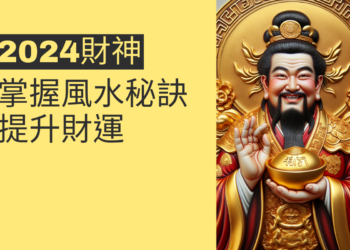
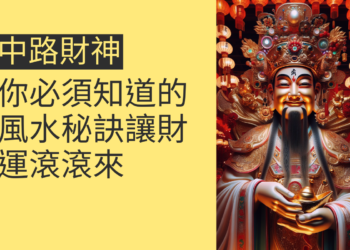
Think of it as nesting dolls. Caishen is the broad category, and several distinct deities sit underneath it: the martial god of wealth, imposing and armed; the civil god of wealth, dressed as a court official and associated with salary and stipend; and various local wealth gods besides. The Five Paths gods of wealth (wu lu cai shen) belong to the martial branch, and what sets them apart is the arrangement itself — one principal deity plus four subordinates, the point being that every one of the five directions is covered. So when someone says they’re making offerings to Caishen, they could mean any of these. When they say the Five Paths gods of wealth, they mean this specific five-part configuration.
Q2: So which five paths are they, exactly?
The most common answer is the five directions: east, south, west, north, and center. Dig around enough, though, and you’ll turn up other schemes — some sort the paths by where wealth comes from, others are lists a particular region assembled for itself. These versions don’t agree with each other, and no single one is treated as authoritative.
Here’s the more useful way to hold it: “five” here means “all of them, nothing left out,” not a list you’re supposed to memorize. Getting hung up on which five is exactly how you miss the sense of completeness the term is reaching for.
Q3: What actually happens on the fifth day of the new year, when people welcome the god of wealth?
Traditionally, this is the day the new year’s prohibitions lift and shops open their doors again. Custom has people setting out offerings at dawn and setting off firecrackers, the idea being that the coming year’s paths to wealth are being ushered into the home or the business. The mood is closer to a loud opening-day celebration than a solemn religious rite.
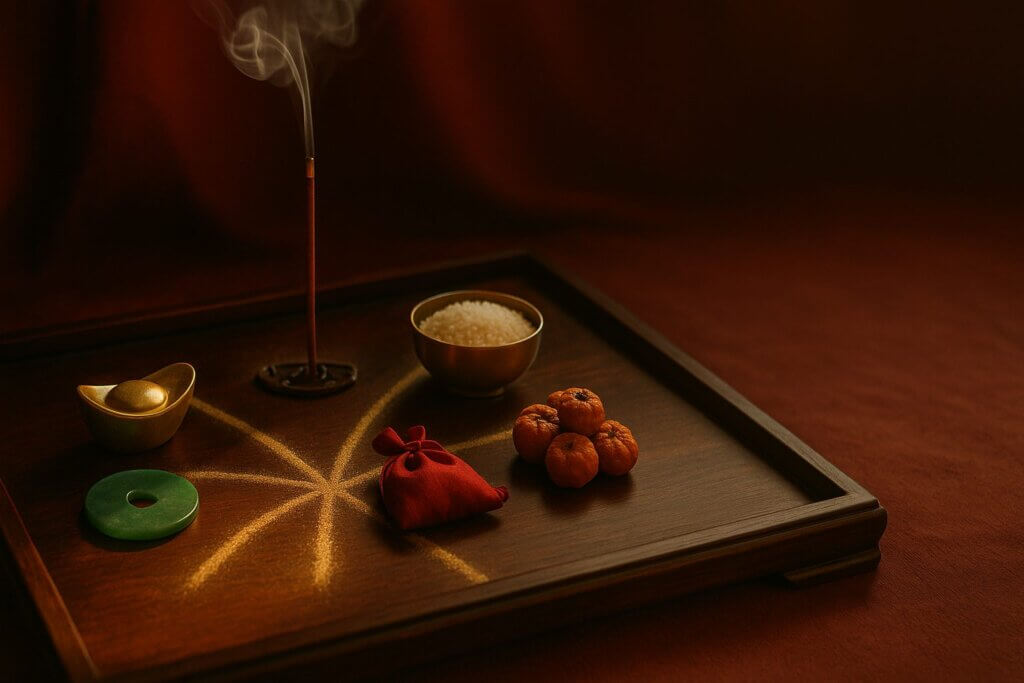
For someone outside the belief system, the meaning of the day boils down to this: it hands an entire community a shared moment to restart. Everyone reopens on the same date and trades good wishes, and that collective reboot carries its own momentum no matter what you believe about the rest.
Q4: I don’t believe in deities — is there anything here for me?
Quite a lot, actually. Folk religion is largely collective practical wisdom wrapped in myth — how ordinary people have thought about wealth, handled uncertainty, and kept their own behavior in check for centuries, all of it encoded in the fine print of the customs.
Take the Five Paths gods of wealth. Pull them apart and you get at least three claims: wealth should circulate rather than pile up, your credit and reputation matter more than any single windfall, and the people who bring others up with them are the ones who last. None of the three requires any belief to test, and you’ll find the same conclusions in plenty of modern business books — just dressed in different language.
Q5: In these stories, what kind of person does a god of wealth actually favor?
The answer that comes down through the tradition is remarkably consistent, and a little surprising: not the best earner, and not the most devout — the person willing to pass the benefit along.
The traditional explanation is that these deities mostly moved among the wealthy before they were deified, so simply being rich yourself doesn’t impress them. What’s rare is the person who makes everyone around them more comfortable too — because backing that person pays out in every direction at once.
Take the deity out of it and the standard still holds. Someone who only pulls resources toward themselves is capped at their own capacity. Someone who keeps sending knowledge, opportunities, and goodwill outward slowly becomes the node nobody can route around. You can disbelieve in gods of wealth entirely and still find this observation about circulation worth carrying with you.