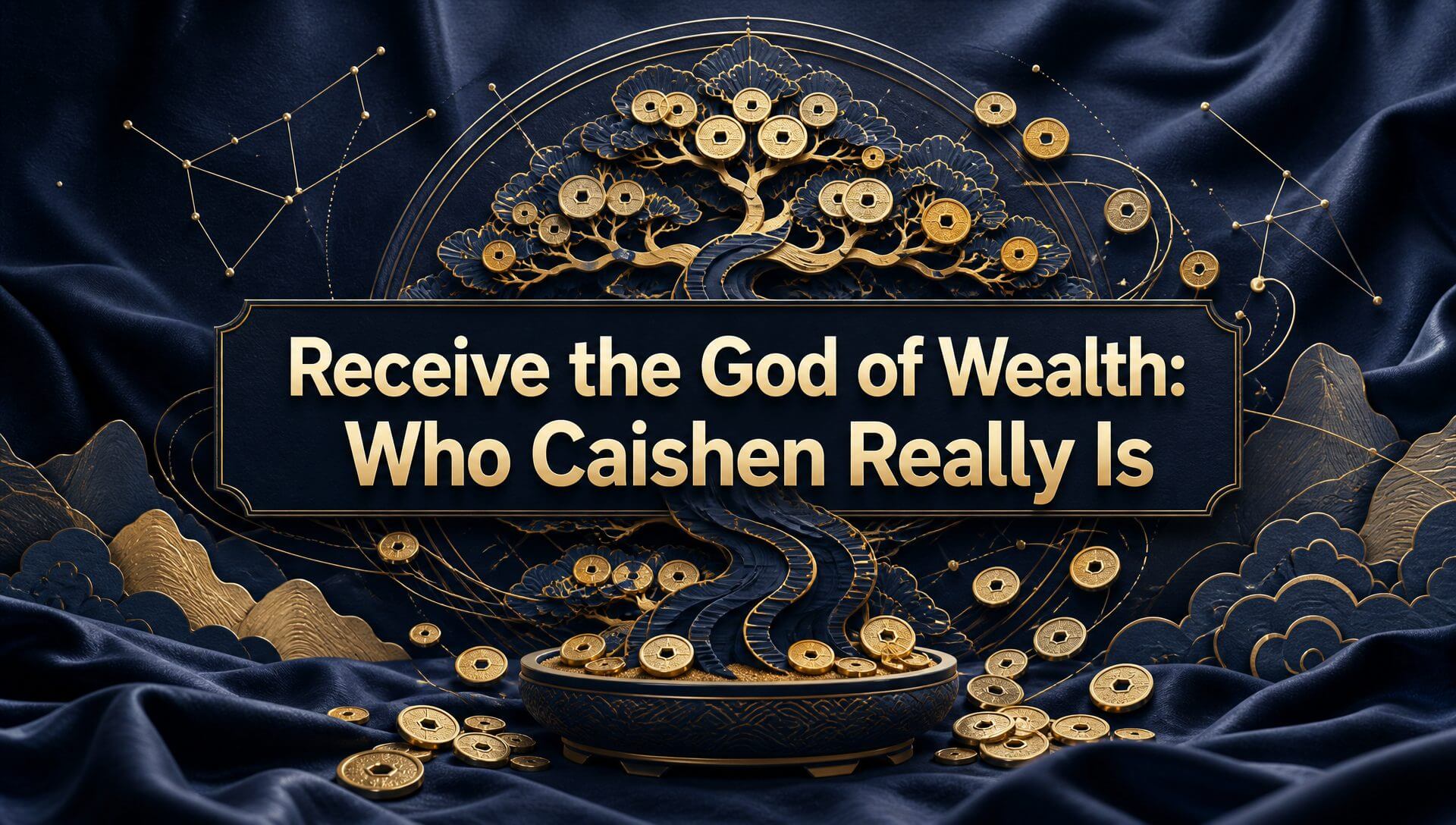
Meet Caishen, the Chinese God of Wealth: 3 Things to Know Before Anything Else
If you grew up in the US, you’ve probably got a mental shelf for Norse gods, a slot for Greek myth, maybe a soft spot for that waving Japanese lucky cat. Caishen, the Chinese god of wealth, almost certainly isn’t on that shelf yet. And here’s the thing — he’s a stranger figure than you’d expect, because he isn’t really a myth at all. He’s a working part of daily life for millions of people right now. Before we get into the stories and the customs, here are the three things that make the most sense to know first.
1. He belongs to folk religion, not to a single organized faith
Caishen doesn’t sit inside one tidy religion the way a saint sits inside Catholicism. Chinese folk religion is layered and unsupervised: pieces of Taoism, pieces of Buddhism, pieces of Confucian ethics, plus a very old habit of promoting admired dead people into gods. Nobody wrote a canon. No central authority ever signed off on the roster.
That matters for how you read all of this. There’s no single correct version of who Caishen is, and people who keep the tradition will cheerfully tell you different things depending on which province their grandparents came from. Some families revere the martial god of wealth, an armored figure riding a black tiger; others revere the civil god of wealth, a scholarly official in a red robe. Some households keep both. That’s not confusion, and it isn’t a corrupted copy of some lost original — it’s how folk tradition works. It grows sideways, absorbing whatever proves useful and shedding whatever stops making sense to people.
2. What he’s believed to govern isn’t cash — it’s money energy
Here’s the concept most Western summaries miss, and it’s the one that makes everything else click. The tradition doesn’t picture Caishen handing out money. It pictures him distributing money energy — the idea that wealth behaves like a current rather than a pile. Think of it less like a check and more like a line of credit, or like the conditions under which money tends to find you: the useful introduction, the deal that closes, the instinct to walk away from a bad partner.
That distinction is doing real work. Money is a number; money energy is a capacity. It’s why, in this worldview, a person can be handed plenty of it and still end up broke — they had the conditions and squandered them. And it’s why the tradition spends far more attention on how you handle wealth than on how you get it. A god who hands out cash would only need you to ask. A god who extends capacity is understood to want to know something about your character first.
3. Welcoming the god of wealth is a specific event, not a general mood
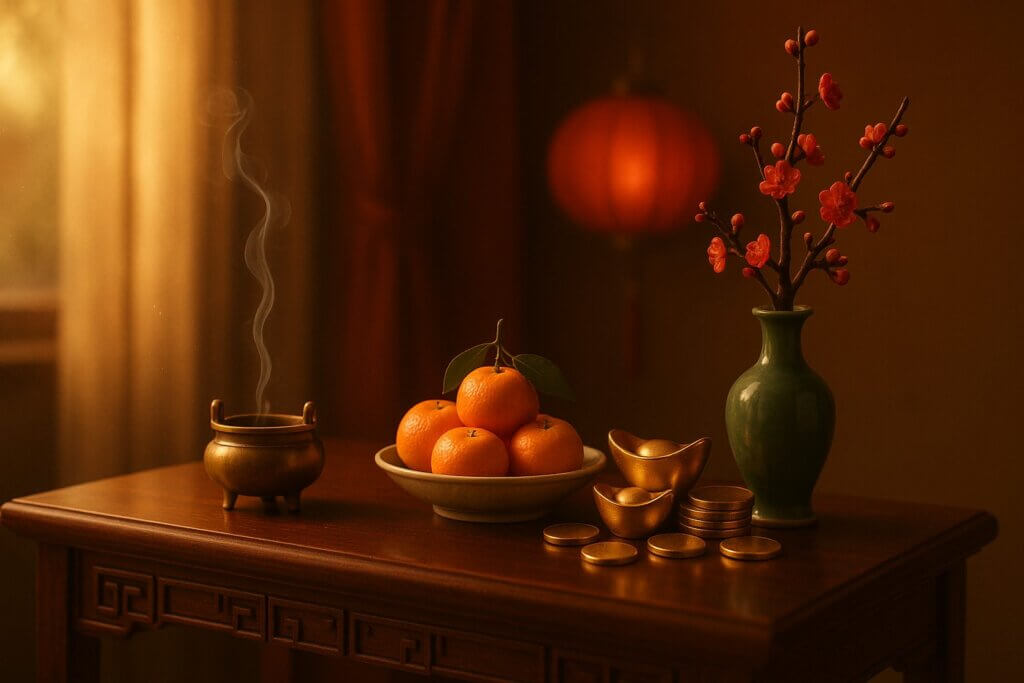
Welcoming the god of wealth (jie cai shen) names a particular moment on the calendar, not a vague attitude. Traditionally the fifth day of the first lunar month is Caishen’s birthday, and the belief is that on that day he travels out among the households of the world. So people stay up, open every door and window before dawn, light incense and firecrackers, and set out offerings — the point being that a guest can’t walk into a house that’s shut.
The verb is worth sitting with. It doesn’t mean beg, and it doesn’t mean summon. It’s the same word you’d use for picking someone up at the airport. The framing is hospitality: he’s already on his way, and the only question is whether you’re awake, whether the door is open, whether the house is fit to receive a guest of consequence. That’s a quietly different posture from most prosperity rituals — less petition, more preparation.
Where He Came From: 3 Real People Who Became the God of Wealth
Here’s one of the odder things about Chinese folk religion: a surprising number of its gods started out as regular people. Generals, ministers, merchants — men who lived, died, and then got promoted to divine status by popular consensus a few centuries later. So Caishen, the Chinese god of wealth, isn’t one biography. He’s several. And the men who ended up in the role got there for their character, not their bank balance. Three of them dominate the tradition, and taken together, they sketch a rough portrait of what the culture thought a person deserving of wealth actually looked like.
Zhao Gongming: the general who paid his debts after death
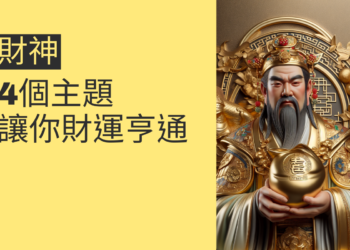
The most widely honored version is Zhao Gongming, the martial god of wealth. He’s usually shown in armor, black-bearded, iron whip in hand, riding a black tiger. Most of his story comes from the Ming-dynasty fantasy novel Investiture of the Gods: he fights on the losing side of a mythic war, is killed by sorcery, and gets canonized as a deity once the dust settles.
The interesting part is the job he got handed. His divine portfolio isn’t “make people rich” — it’s closer to fair settlement. He presides over buying and selling, resolves grievances, and makes sure transactions land where they’re supposed to. He came into the role as a defeated soldier who was honored anyway, for loyalty rather than for winning. And the martial imagery isn’t about conquest. The tiger and the whip are protective gear. He guards wealth every bit as much as he grants it, which tells you the tradition was just as worried about losing money as it was about making it.
Bigan: the minister with no heart, and why that’s a compliment
Bigan was a real Shang-dynasty official, remembered as the man who kept telling a tyrant the truth. As the legend goes, the king finally got fed up with that honesty and remarked that a sage was said to have seven openings in his heart — then had Bigan’s heart cut out to see for himself. Bigan died for saying what everyone around him was too scared to say.
He became a god of wealth by a piece of reasoning so dry it almost reads as a joke: a man with no heart can’t play favorites. No heart means no bias — no cousins to enrich, no grudges to settle, no soft spot anybody can work. He’s the god of wealth handed out without partiality.
Sit with what that implies. A whole culture picked, as its patron of money, a bureaucrat martyred for honesty that couldn’t be bought off. Not the richest man in the story. The one nobody could buy. Whatever you make of the metaphysics, that’s a pointed statement about what makes wealth legitimate in the first place.
Guan Yu and the merchants: wealth built on keeping your word
The third major figure is Guan Yu, a third-century general honored for a long list of things, and by merchants specifically as a god of wealth. He never made money. What he was famous for was loyalty — above all for turning down an enemy’s lavish gifts and titles to return to a sworn brother who had nothing to offer him.
Merchant guilds adopted him for a deeply practical reason. Pre-modern Chinese commerce ran on long-distance credit with almost no legal enforcement behind it. Goods moved on a promise, and a merchant who broke his word was finished. So the guilds took as their patron the one man who couldn’t be bribed out of a promise. Swearing an oath before Guan Yu made a deal socially binding at a time when nothing else could.
Notice the pattern running through all three. Fairness, incorruptibility, loyalty. Nobody handed the office of god of wealth to a man who was just good at getting rich.
3 Ideas Underneath the Customs — and What They Offer a Skeptic
Now for the part that’s actually portable. Every custom around welcoming the god of wealth has a piece of reasoning built into it, and the reasoning survives translation even when the ritual doesn’t. What follows is how people have traditionally done things and, more to the point, the thinking behind it. You don’t have to light anything or believe anything to find the logic worth arguing with. Honestly, some of it is sharper than the money advice you’ll hear in English.
1. Wealth is something that flows, so hoarding is the failure mode
The customs are almost obsessive about movement. Doors and windows get thrown open rather than sealed. Offerings get eaten afterward, not tossed out. Red envelopes travel down to kids and up to parents on the same days. In some places, people traditionally borrow a symbolic sum from a communal fund at New Year and pay back more than they took the following year. Water features get placed so the water circulates instead of sitting still.
The belief underneath all of it is that money energy behaves like a current: block it and it stagnates, keep it moving and it compounds. The tradition is explicit that the sharing it asks for isn’t giving away ninety dollars out of every hundred you earn. Sharing your time counts. Passing along something useful you learned counts. Teaching someone what actually worked for you counts. The idea is that the energy has to leave your hands in some form before more of it can arrive.
Strip out the metaphysics and a real claim is still sitting there: money that only sits is money doing nothing, and the returns on circulating what you have — capital, knowledge, attention, help — are the ones that build on themselves. Anyone who’s watched a reputation for generosity throw off opportunities for a decade has seen the mechanism work, whatever they want to call it.
2. Being trusted is the actual asset
Look again at who got the job: the impartial one, the one who couldn’t be bought, the one who kept his word to a friend who had nothing left to offer. In this tradition, money energy shows up as an expression of trust — you were extended capacity because someone judged you fit to hold it. And trust that gets extended is trust that can be pulled back.
That’s why the customs pay so much attention to unglamorous things. Debts settled before the new year starts, so you’re not carrying obligations across the threshold. Accounts squared with the people you deal with. A house cleaned before the guest arrives. None of it is about attracting money. It’s about not being the kind of person money leaves.
The modern translation writes itself. Your credit, your reputation, your record of doing what you said you’d do — these aren’t the boring administrative layer underneath your finances. In a world that runs on repeated dealings, they *are* your finances. Every serious opportunity that ever came your way came through somebody who decided you were good for it.
3. The tradition is more interested in whether you make others rich
Here’s the part that surprises newcomers most, and it’s the sharpest idea in the whole system. The belief holds that enriching yourself alone doesn’t impress these gods. Before they were gods they were officials and generals; wealthy people were their ordinary company. Getting rich by yourself doesn’t set you apart.
What the tradition says gets rewarded is the person who makes other people prosperous. The reasoning is almost coldly financial: a self-made fortune is a dollar returning fifty cents, while a person who lifts a dozen others turns a dollar into ten. So that’s who gets more. When you pass on something that genuinely helps the people around you build their own wealth, some of it circulates back to you — and the tradition claims a god watching that pattern does the obvious thing and increases the position.
You can throw out the deity and the claim still stands. The people with the most durable prosperity are usually the ones with the widest network of people who owe their own break to them. That isn’t mysticism; it’s what a compounding network looks like from the inside. Whether you file it under gods, karma, or plain social capital, the takeaway comes out the same: pass on what you know, and don’t be stingy with the thing that made you.
That’s the view this tradition takes of money, and it’s a strikingly demanding one. It never treats wealth as a prize for being clever or a verdict on your worth. It treats it as something entrusted to you, temporarily, on the assumption that you’ll move it along — and it saves its real approval for the people through whose hands the most has passed onward. You may not want the incense. But as a standard to hold your own relationship with money against, it asks a harder question than most: not how much you’ve piled up, but how much has moved through you, and who ended up better off for it.
5 Questions People New to This Usually Ask
When Americans first bump into the custom of welcoming the god of wealth, the questions tend to land in the same few spots — partly because the customs are unfamiliar, and partly because they resemble things in Western culture that they’re actually pretty different from. These five come up the most, and each one deserves a straight answer, including the uncomfortable one about whether this is just prosperity gospel with different scenery. Here’s what the tradition actually holds, and where reasonable skepticism lands.
Do you have to believe in any of this for it to be interesting?
No, and the tradition itself is unusually relaxed on that point. Chinese folk religion has never asked for a statement of faith the way Western religions often do. Enormous numbers of people who take part would describe themselves as not particularly religious; they participate because it’s what their family does, because it marks the new year, because their grandmother would notice if they didn’t.
Practice comes first, belief is optional, and nobody’s auditing you. That makes the whole thing far more approachable as a cultural object than as a doctrine you’d have to accept or reject. You can read these customs the way you’d read a proverb — compressed reasoning that a lot of people found useful over a long stretch of time.
The ideas hold up under that reading. Circulate rather than hoard. Guard your credit. Lift the people around you and your own position improves. You can take those seriously as claims about how prosperity actually behaves without believing that a deity enforces them. Plenty of the people lighting the incense would tell you roughly the same thing.
What does welcoming the god of wealth actually look like on the day?
Traditionally it falls on the fifth day of the first lunar month, and the striking part is the hour — people are up well before dawn, sometimes at midnight, because the thinking is that the earlier you receive a guest, the better the welcome. Doors and windows get thrown wide open. Lights go on all through the house.
Offerings are set out on a table: fish, whole chickens, fruit, wine, sweets. Incense is lit. Where it’s still permitted, firecrackers go off in enormous volume — historically to clear away bad influences and to announce the household. Businesses often reopen for the year on exactly this day, and shopkeepers may make it the first order of business before a single customer walks in.
The atmosphere is worth noting, because it isn’t solemn. It’s loud, crowded, and celebratory — closer to a block party than a church service. Families eat the offerings together afterward. If you’ve ever stood out on a street at midnight on New Year’s Eve, you’ve got the right mental picture.
Isn’t this basically prosperity gospel?
It’s a fair question, and the honest answer is that the two share a surface and diverge underneath. Both tie the divine to material wealth, which is enough to make them look alike from a distance.
The internal logic runs the opposite direction in a couple of important ways, though. Prosperity theology typically reads wealth as evidence of divine favor and poverty as the absence of it — a verdict on the person. This tradition doesn’t. Its gods were a martyred honest official, a general who died on the losing side, and a man famous for turning down a fortune. None of them was rich, and the tradition says plainly that being rich earns no special regard by itself.
The other difference is the obligation. Here wealth arrives as something entrusted to you, carrying a duty to pass it along, and the reward is said to go to the people who make others prosperous. That’s a different shape of claim than “give and you will receive more.” It’s closer to this: you’re holding this on behalf of a circuit, so keep the circuit running.
Why fish and oranges? What’s with the specific offerings?
A lot of it is puns, and that’s not a way of trivializing it — wordplay is genuinely load-bearing in Chinese symbolic culture. The word for fish, yu, sounds like the word for “surplus,” so a whole fish stands for having more than you need. Oranges and tangerines carry sound associations with luck and with gold. Sticky rice cake, niangao, echoes “year high” — rising a little higher each year.
Other choices are about form rather than sound. A whole fish or a whole chicken means completeness, beginning to end, nothing missing. Round fruit means fullness. Red is everywhere because red is the color of vitality and celebration.
What’s charming about this is how unpretentious it is. These aren’t esoteric symbols that need an initiate to decode them; they’re the ordinary good things you’d put on a table, arranged so the whole meal quietly reads as a sentence about abundance. And then everyone eats it. The tradition rarely lets anything go to waste — which fits the idea that things are supposed to circulate in the first place.
Is there a version of “keeping your money energy moving” with no ritual at all?
The tradition’s own answer is closer to yes than you’d guess, because the practices it emphasizes most are behavioral rather than ceremonial. Keeping money energy in motion is explicitly not a matter of how big your donations are. Sharing your time counts. Volunteering counts. Teaching someone a skill that helps them build their own footing counts — and the tradition rates that last one highest, because the person you helped turns into a source instead of a recipient.
So a ritual-free version isn’t a watered-down substitute; it’s arguably the core with the packaging stripped off. Settle what you owe. Protect your reputation the way you’d protect a balance sheet, because functionally that’s what it is. Circulate what you have — money, knowledge, introductions, hours — instead of letting it sit. Make a point of helping the people around you find their own footing, and don’t keep score too closely.
Whether a god is watching is not a question anyone can settle on your behalf. But the description of what happens when you live that way is recognizable enough that a skeptic and a believer could compare notes and find they’d been describing the same thing all along.