Meet the Deity First: Three Things That Place Yellow Jambhala on the Map
If you’ve never spent time around Chinese devotional culture, your first look at a Yellow Jambhala statue probably raises more questions than it answers. Why is he yellow? What’s that animal in his hand? Is this the same kind of thing as a lucky rabbit’s foot or a four-leaf clover? Here’s the short version: in this tradition, deities have specialized roles — think division of labor — and Yellow Jambhala’s role is an unusual one. So before we get into what people do for him, it helps to place him on the bigger map.
1. He isn’t a heavenly bureaucrat — he’s a protector
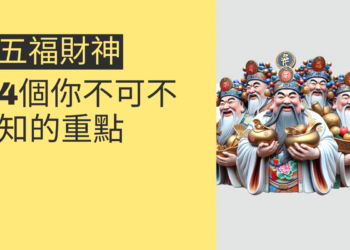
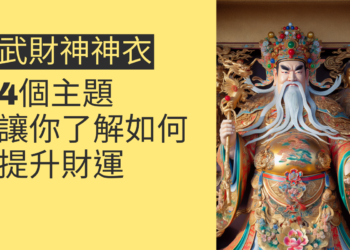
When Chinese tradition talks about a god of wealth, it isn’t talking about one guy. Caishen, the Chinese god of wealth, is really a whole family of figures: some who came up as merchants, some who came up as generals, some who look after a single patch of ground. Yellow Jambhala stands apart from that lineup because his roots aren’t Chinese at all. He comes out of ancient India and Tibetan Buddhism, and only later traveled east with Buddhism and got absorbed into the Chinese landscape of wealth-related belief.
Within Tibetan Buddhism, Yellow Jambhala is classed as a dharma protector. Picture a guardian entrusted with a specific assignment, not an administrator up in heaven deciding who gets the promotion and who gets rich. That distinction matters more than it sounds like it should. A protector has a defined scope of work, and the work is clearing obstacles — not handing out year-end bonuses at random. Once you’ve got that straight, a lot of the customs that follow start to click.
2. His domain is scarcity, not sudden riches
This is where people misread him most often. In the traditional account, the assignment Yellow Jambhala was given is to relieve the suffering of poverty — and the operative word there is suffering. What he’s said to address is the state of being unable to breathe, unable to keep the basics steady. Not multiplying your assets tenfold.
That’s why in the older written and oral sources, the words that cluster around Yellow Jambhala tend to be things like “secure,” “never lacking,” “enough to eat and wear” — not “windfall.” Underneath that sits an old and pretty clear-eyed value judgment: poverty is worth solving because it strips people of slack, and a person with no slack has a hard time doing good and a hard time thinking past next week. Wealth isn’t the point in this framing. It’s the condition that gives a person room to choose.
3. The four markings on a Yellow Jambhala statue are basically an instruction sheet
Traditional religious images aren’t put together casually — every detail is carrying a message. A typical Yellow Jambhala statue will usually show these four:
- The jewel-spitting mongoose: the small animal gripped in his left hand, said to spit out gems — a sign that the source of wealth isn’t in your own hands but entrusted to you
- The fruit: his right hand most often holds a piece of ripe fruit, standing for ripeness and harvest, and for the fact that a result always has a cause behind it
- The seated posture and the planted foot: one leg folded, one foot on the ground — the posture of someone about to stand up, meaning he’s dynamic and responsive rather than static
- The full, heavy body: not a show of affluence; in the visual language of these images, it’s abundance made visible
Read those four together and you’ll notice the whole figure is saying one thing: wealth is entrusted, wealth has causes, and wealth moves. It’s also why so many people find the image approachable the first time they see it. His posture isn’t that of a judge looking down from the bench. It’s closer to someone half out of his seat, ready to help.
Where It Comes From: A Commission Handed Out After a Falling Rock
Almost every culture puts a story behind its wealth deity. Norse myth has cursed gold. Greek myth has a king who turned everything he touched to metal. The story behind Yellow Jambhala, the Tibetan Buddhist wealth deity, is less dramatic than either one — plain, honestly — but it set the direction for every custom that grew up around him afterward. Here’s the whole thing, told once, and you’ll see that his job description came out of one very specific scene.
That Day on Vulture Peak
As the story goes, the Buddha was teaching in the mountains when someone who objected to what he was saying shoved a boulder down the slope at him. Yellow Jambhala was there. He put his own body in the way to protect the teaching and took the injury himself. Afterward the Buddha said something to him that amounts to this: from now on, relieving the suffering of poverty is your work.
The interesting part isn’t the supernatural feat — it’s the order of cause and effect. Yellow Jambhala didn’t become a god of wealth because he had wealth. He did something protective for someone else first, and the office was entrusted to him afterward. Wealth here is an assignment, not a prize. That sequence became the underlying logic of the whole culture of asking for prosperity.
The Treasure-Spitting Mongoose: Wealth Is Something Handed Over
The easiest way to spot an image of Yellow Jambhala is the treasure-spitting mongoose he holds. In older Indian legend, this mongoose-shaped creature guarded the dragon clans and the treasure buried underground. It holds jewels in its belly, and when its master gives it a gentle squeeze, it spits them out for whoever needs them.
Notice which direction that action runs. The treasure starts out held in. Someone has to squeeze, and there has to be a clear destination, before anything comes out at all. There’s no mongoose in the legend that just drops money on its own, forever. Wealth only becomes real once it passes through an act of handing over — and that image keeps coming back.
Why Yellow
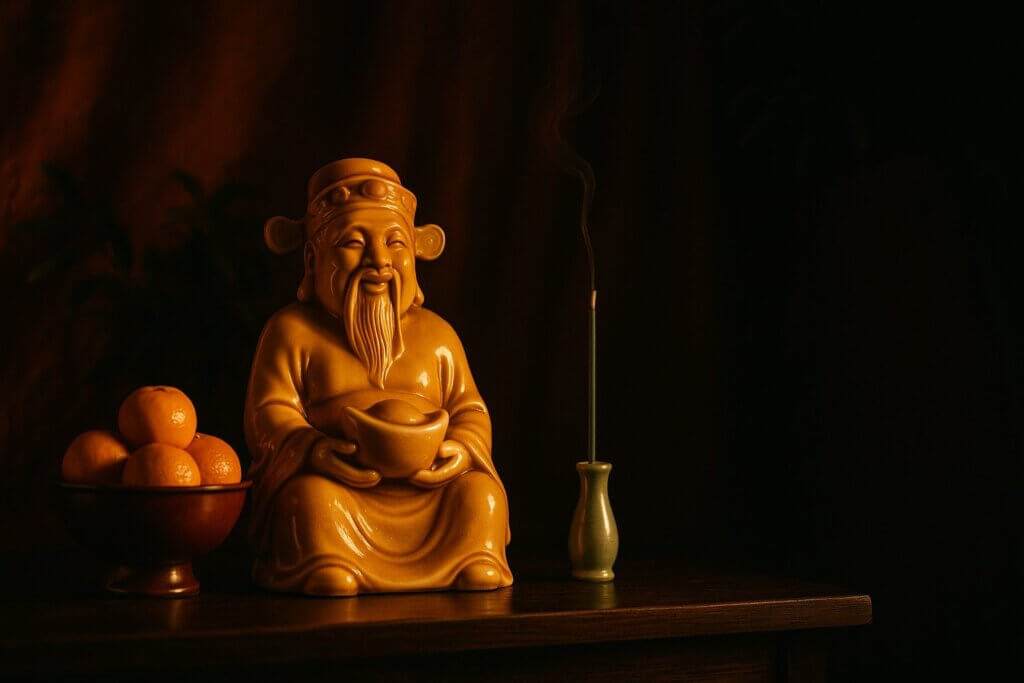
Color does specific work in these images. In this system, yellow corresponds to increase — making what already exists more abundant — and it’s kept separate from the other functions, like pacifying, drawing near, or subduing. So the yellow in Yellow Jambhala’s image isn’t a casual choice of palette. It’s a label for what he does.
What’s worth sitting with is that increase presupposes something already there to increase. This isn’t magic that conjures from nothing; it’s the small made larger and the thin made thick. That setup lands surprisingly well for modern readers — you’ve got to have a little of something in hand before compounding has anything to work on.
What People Traditionally Do: 3 Customs and the 3 Ideas Behind Them
Here’s the frame before we start: what follows is cultural description, not a set of instructions. These are things people have traditionally done, plus what those practices are actually saying. And the interesting part is that even if you don’t believe in any deity at all, the thinking behind these customs comes apart cleanly enough to use. They add up to a philosophy of money wrapped in ritual — a pretty practical one, at that.
1. Fresh Water and a Clean Cloth: Turning “Upkeep” Into a Daily Reminder
Traditionally, households that keep a statue of Yellow Jambhala, the Tibetan Buddhist wealth deity, change out a cup of clean water every day and wipe the statue down. Some people write this off as empty formality. But the design of it is genuinely clever: the task is small enough that failing to do it is almost impossible, and it has to be done every single day.
The idea underneath is that your relationship with money has to be something you can sustain, not something you run on bursts of enthusiasm. If you can’t manage to swap out a cup of water, the harder things — tracking your spending, reviewing your expenses on a schedule, honoring your commitments on time — probably won’t last either. Seen that way, the custom is really training a low-cost form of discipline. The foundation of wealth isn’t one big surge. It’s a long run of unremarkable maintenance.
2. Money Energy Is Supposed to Move — Hoard It and It Stalls
This is the most central idea in the whole cultural picture, and also the most counterintuitive. The traditional framing goes like this: when Caishen, the Chinese god of wealth, shares money energy with you — the idea that wealth behaves like a current rather than a pile — that’s an expression of trust, and what he wants in return is for you to put it to good use and pass some of it back out. In other words, he shares wealth with you so that you can help him build merit.
So whether or not the money energy you’ve received has turned into actual cash yet, you’re expected to share it onward. That’s what makes it compound. This is where a lot of people miss the point, assuming “sharing” means donating ninety dollars out of every hundred you earn. That’s not it. The point is to keep the energy moving outward: passing a good idea you’ve learned along to someone else counts, and so does giving your time as a volunteer.
Strip out the religious language and what’s left is concrete enough to work with. Resources only create connections when they’re in motion, and connections are what generate new opportunities. Money locked in a safe never meets anybody. Resources spent on learning, on helping, on repairing relationships will grow you a network. That’s why the tradition holds that the people who keep their hands open are the ones who end up catching the most.
3. Credit and Making Other People Rich: What This Value System Actually Scores You On
There’s one thing people traditionally emphasize above all else in connection with Caishen: if you said you’d do it, do it. In folk practice, this shows up as the rule that after you make a wish, you remember to come back and give thanks — but what it’s really training is creditworthiness. In an era with no credit bureaus, whether a person would keep a promise made to someone they couldn’t even see served as a sketch of their character. And wealth, at bottom, is to some degree just a measure of how willing other people are to put resources in your hands.
The scoring system is the part worth sitting with. In this worldview, getting rich yourself doesn’t count for much — before Caishen became a god, the people he dealt with were already wealthy, and he has seen plenty of that. What actually earns regard are the people who help others get rich too. Which is why the most highly valued form of sharing is passing the good ideas you’ve learned to the people around you, so that they become prosperous because of it.
And there’s a rather smart loop built into this. Because those people improved through what you shared with them, some portion of that money energy makes its way back to you in the process. When Caishen sees your money energy compounding, he naturally adds to the position — after all, a dollar put into someone else might return fifty cents, while a dollar put into you returns ten. In modern terms, that’s a description of leverage: real compounding doesn’t happen in your account. It happens in the people you’ve influenced.
Yellow Jambhala Statues: 5 Questions People Keep Asking
If this is your first run-in with the subject, a few blunt questions probably come to mind. Is this superstition? What does it have to do with Buddhism? And if you don’t believe any of it, what are you supposed to do with it? Fair questions, all of them, and all worth a real answer. The five below aim to give you enough background and context that even with no religious experience of your own, you can see what this tradition is actually saying — and why it has lasted as long as it has.
Is Yellow Jambhala the same figure as “the god of wealth”?
Not exactly. In Chinese culture, the god of wealth is a category rather than a single deity. It covers the civil god of wealth, a figure who came out of the merchant world; the martial god of wealth, known for loyalty and honor and later adopted as a guardian by the business community; and any number of local wealth deities besides. Each has a different origin story and a different personality. Yellow Jambhala comes from somewhere else entirely — the Tibetan Buddhist system, where the original role was that of a protector. Because the duties attached to that role involved wealth, he ended up with a place in Chinese wealth-seeking culture too.
So here’s the thing: “god of wealth” is a job description, not a name. Deities from very different sources got filed in the same cabinet because they were handling similar work. That kind of cultural compatibility is one of the more striking features of Chinese folk religion — it rarely excludes. Far more often, it absorbs and sets things side by side.
What exactly is that animal in his hand?
In the legends it’s a treasure-spitting mongoose-like creature (tu bao shu), a mythical animal connected to the dragon clans and to buried treasure — not an actual rodent. Plenty of cultures have imagined the underground as the place where wealth lives: ore veins, buried gold and silver, the yield of the land itself. An animal that can move freely below the surface naturally picks up the job of guarding what’s down there. That association shows up all over the world; it isn’t uniquely Chinese.
The more interesting part is how the creature is said to work. It’s not a vending machine. It has to be squeezed gently, and there has to be a specific recipient, before the treasure comes out. That detail carries a message worth keeping: releasing wealth takes someone to prompt it, and it takes somewhere for the wealth to go. It was never something that simply falls on you.
Is this religion, or is it folk custom?
The line between the two is genuinely blurry. Yellow Jambhala’s origins are religious in the full sense — Tibetan Buddhism has a complete body of doctrine, practice methods, and lines of transmission behind the figure. But once the image entered Chinese popular life, most people’s relationship with it started to look a lot more like folk custom: a statue kept at home, the water changed daily, a wipe-down before the new year. There isn’t necessarily much theology in any of that.
You’ll find the same situation in plenty of other cultures. Not everyone hanging a Christmas stocking is commemorating a saint, and not everyone who grabs a lucky charm on the way out the door believes in supernatural forces. Customs frequently drift loose from the religious framework that produced them and become something else — a cultural habit, a family memory, sometimes just a rhythm that makes a person feel settled. That doesn’t make them fake. It means their function has changed.
If I don’t believe in any deity, what’s left in this for me?
Roughly three ideas you can lift out whole. First, circulation beats hoarding: resources create connections while they’re moving, and putting money and time into learning, into helping other people, into keeping relationships alive generally grows more than letting them sit. Second, credit is the foundation of wealth. Doing what you said you’d do has, in every era, been the precondition for anyone handing you resources in the first place.
The third is the most interesting of the bunch: the person who helps other people get richer is the one worth investing in. Coming out of a deity’s mouth it sounds like religious language, but what it describes is a very ordinary mechanism. Someone who makes the people around them better off will naturally pull more resources into their orbit. None of these three requires you to believe anything. They just happened to travel a very long way wrapped in a religious shell.
Why does the tradition downplay windfalls?
Because in this value system, wealth is a responsibility you’ve been handed, not a prize you’ve won. The old stories make it plain: Yellow Jambhala’s duties begin with protecting and supporting others, and what he was entrusted with was relieving the suffering of poverty — not handing out good luck. The whole narrative keeps its weight on what you intend to do with the money once you have it, rather than on how much of it you can get.
That also explains why traditional customs put so much emphasis on giving back, sharing, and keeping your word. If wealth were purely luck, all of that would be beside the point. But if wealth is something entrusted to you, an implicit contract comes with it — you’re expected to use it well and pass it on. It’s a distinctly old-fashioned idea that turns out to be unexpectedly modern: whoever receives resources bears some responsibility for how those resources move.
Take the whole thing together and a Yellow Jambhala statue looks like a remarkably dense cultural container. It compresses a society’s answers about how money should come, how it should go, and how it should be judged into one figure’s color, posture, and the small animal held in his hand. You don’t have to buy the theology to see the judgment inside it: what gets valued here is never who has piled up the most, but who keeps resources moving well and leaves the people nearby better off too. That’s the scoring system a thousand-year-old culture landed on for wealth — and it still holds up.