Who Is the Martial God of Wealth? 3 Basic Ideas to Get Straight First
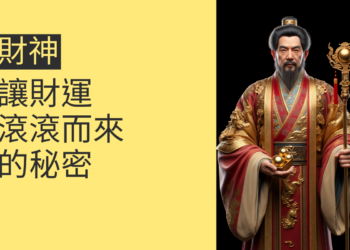
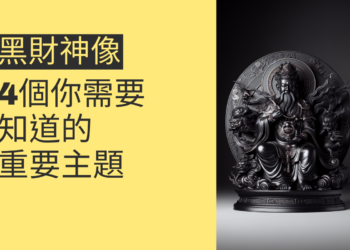
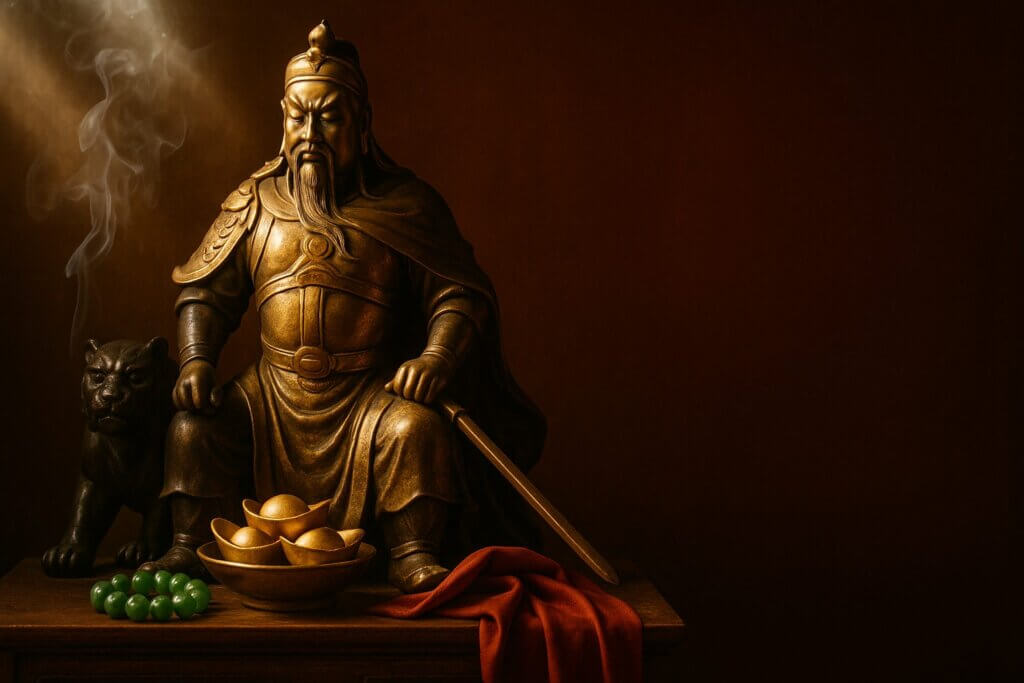
If Chinese folk religion is brand new to you, here’s the thing that tends to surprise Americans first: in this tradition, wealth isn’t looked after by a gentle goddess of good fortune. It’s looked after by a general in full armor, riding a black tiger, holding a steel whip. He’s called the martial god of wealth — one of the figures grouped under Caishen, the Chinese god of wealth. And that image is already telling you something. It shows you how this culture understands money in the first place. So let’s start with three basic ideas and build the foundation right.
1. Folk religion isn’t one religion — it’s a whole division of labor among gods
To understand the martial god of wealth, you first have to understand the world he lives in. Chinese folk religion doesn’t work like Christianity or Islam, with one scripture, one god, and a unified church. It looks a lot more like the Greek or Norse pantheons Americans already know — a big cast of deities, each with a job. One handles weather, one handles exams, one handles childbirth, one keeps sailors safe. Each has a defined territory. Ordinary people don’t pick a single god and stick with him for life; they go to whichever one matches the situation they’re in.
That structure has an interesting consequence: what a god gets put in charge of tells you what a society actually cares about. China has an extremely long commercial tradition — long-distance trade, remittance banks, guilds, family firms — so of course wealth needed a specialist. That’s the slot the martial god of wealth fills. He isn’t an all-purpose deity. He’s the one who handles this particular department, the same way you wouldn’t call a lawyer to fix your plumbing.
2. Gods of wealth come in civil and martial versions, and the martial one handles money you go out and take
There isn’t just one god of wealth. Traditionally they fall into two broad categories: the civil god of wealth and the martial god of wealth. The civil god of wealth is usually shown dressed as a court official — scholarly, refined, holding a gold ingot or an account book. He stands for salary, steady income, wealth stacked up step by step. Think paycheck and savings account.
The martial god of wealth has completely different energy. He’s armed head to toe and looks formidable, and he stands for the kind of wealth you only get through competition, risk, negotiation, and staking out new territory. Business owners, salespeople, shopkeepers — traditionally these are the people who feel closest to the martial god of wealth, because their income doesn’t show up on a schedule. They have to go out and fight for it.
The distinction itself is a piece of observation. This culture figured out early that building wealth on a steady paycheck and building it by betting on yourself are two completely different psychological states that call for different temperaments. It doesn’t say one is nobler than the other. It just pragmatically hands each one a god of its own.
3. Why does a god of wealth carry a weapon? Because protecting money matters more than getting it
Plenty of people are puzzled the first time they see the martial god of wealth. You’re asking for prosperity — so what’s with the weapon and the tiger?
The answer comes down to a hardheaded idea: in the traditional picture, earning money is only step one. Whether you can hold onto it is the real question. Money gets stolen, gets swindled away, gets loaned to a relative and never comes back, gets wiped out by one bad call of your own. So a god of wealth can’t just hand out money — he has to be able to fight. His weapon isn’t there to seize anyone else’s wealth. It’s there to block the things that drain a believer’s away.
Strip off the religious packaging and you’re left with a remarkably clear-eyed piece of money advice: people’s finances usually don’t collapse because they didn’t earn enough. They collapse because the defense was too weak. The armor on the martial god of wealth is this culture’s visual language for risk management.
From Historical Figures to Wealth Deities: Two Main Threads Behind the Martial God of Wealth
Nobody sat down one afternoon and invented the martial god of wealth. He’s what you get when a few centuries of historical memory, popular fiction, and plain commercial need get kneaded together, slowly. Here’s the part that makes the story interesting: the role was never filled by one person. Depending on the region and the trade, the face people pictured could be a completely different guy. The two threads below are the ones told most often — and the ones that give away the most.
1. Zhao Gongming: The “Marshal” Who Started Out as a Plague God
The figure most often identified as the martial god of wealth is a man named Zhao Gongming, and his route to the job was anything but a straight line. In the earlier written sources, there’s nothing appealing about him at all. He was a god associated with plague and death — the kind of divine presence you hoped would keep its distance.
The turn comes in later Daoist texts and popular novels. Bit by bit, the stories recast him as a commissioned marshal riding a black tiger and carrying an iron whip, commanding four subordinates whose separate portfolios were attracting wealth, bringing in treasure, summoning valuables, and gathering rarities. Picture a marshal with his own finance team, and it makes perfect sense that money matters landed on his desk. By the Ming and Qing dynasties, as commerce expanded, Zhao Gongming’s identity as a wealth deity had almost entirely eclipsed his earlier reputation.
The reversal itself is worth sitting with: a god who once stood for calamity ends up as the one who delivers fortune. What that probably reflects is a very old intuition — the force that can take things away from you and the force that can give them to you tend to be the same force. Whether you can stay on good terms with it determines which face it turns toward you.
2. Guan Yu: A General Enshrined for His Credit
The second thread is the famous one: Guan Yu, a celebrated general of the Three Kingdoms era. He was a real military commander in history, written into the novel *Romance of the Three Kingdoms* as the very embodiment of loyalty and honor, and performed on the opera stage for centuries after that.
What stands out is that merchants elevated Guan Yu to martial god of wealth for reasons that had nothing to do with his skill in battle. He was chosen for the trait most firmly attached to his name: he kept faith, he honored his commitments, and what he promised, he did. In an age with no modern courts and no credit bureaus, when deals were routinely closed on a spoken word and a single sheet of paper, whether a man kept his word was very nearly the only risk assessment available. So when merchants made offerings to Guan Yu, they were also making a declaration to one another: in our line of work, reputation is what we eat.
So the martial god of wealth in Chinese folk religion was never a lucky deity handing out money at random. One of his faces is about capability and defense; the other is about credit and character. Put those two together and you’ve got, more or less, the complete list of what the traditional commercial world asked of anyone in business.
What People Traditionally Do: 3 Ideas Behind the Martial God of Wealth Customs
Now for the customs themselves. One thing to be clear about up front: what follows describes what people have traditionally done and how they thought about it — it isn’t a set of instructions for you. Treat it as a window into how another culture used concrete, physical actions to teach an abstract idea about wealth to one generation after the next. The interesting part is rarely the action itself. It’s the reasoning underneath it.
1. Welcoming the god of wealth: why the door opens on a particular day
During Chinese New Year, welcoming the god of wealth is a widespread custom. Tradition holds that the fifth day of the first lunar month belongs to Caishen, and some families open their doors at dawn that morning, set off firecrackers, and reopen their shops — a symbolic invitation for the god of wealth to come in, and the official start of the business year. The fifteenth day of the third lunar month is also observed in some places as the birthday of the martial god of wealth, and certain regions make a real occasion of it.
Set the mythology aside and look at what the custom actually accomplishes: it draws an unmistakable starting line. Before the new year, you settle old accounts, clean the house, pay back what you owe, and deal with whatever you’ve been ducking. After the new year, you pick a day and open the doors again. A whole society turns the page on the same beat, which gives everyone a shot at leaving last year’s mess in last year.
Here’s the thing — that’s the same psychological machinery behind the New Year’s resolutions you already know, only more concrete. Instead of a private decision made quietly in your own head, the entire neighborhood is setting off firecrackers, so your fresh start gets seen and witnessed. A beginning with real ceremony attached to it is a lot harder to cancel on yourself in February.
2. Offerings and gold ingots: acting out the idea that money has to move
At traditional ceremonies, people prepare offerings, light incense, and set out items representing gold ingots (yuan bao) and wealth. What all of it has in common is that every piece eventually gets sent away — burned, divided up, or eaten. Not one of them is meant to be kept and stockpiled at home.
That detail is the key to the whole culture around Caishen. In this way of thinking, wealth is imagined as an energy that moves rather than a pile of things you can lock in a safe. Money that sits still does nothing and may even start to go bad; money that circulates is what generates more money. So even the ritual gestures rehearse the same lesson on repeat: what you receive is meant to go back out.
Worth noting, too: “sharing” in this tradition never meant giving away most of what you earn. Make a hundred dollars and nobody expects you to hand ninety of it away — the real point is keeping the energy moving outward. Passing along an idea that’s genuinely useful to someone else is sharing. Volunteering your time is sharing. Telling a friend who just started a business about the hole you fell into yourself is sharing. The form doesn’t matter. The circulation does.
3. Why the person who helps others get rich is considered the luckiest of all
There’s a Chinese folk idea about the martial god of wealth worth knowing here — not as a financial rule, but as a cultural lens on wealth. Money energy — the idea that wealth behaves like a current rather than a pile — is said to be extended to you as an act of trust, and what’s expected in return is that you use it well and push the benefit further out. Once that cycle starts turning, it works like a snowball: bigger with every rotation.
And the form of spreading that gets valued most is passing what you’ve learned — the parts that actually work — to the people around you, so they prosper too. Because they got better off through you, some portion of that comes back around to you. Not in a mystical sense, but in a completely practical one: connections, trust, reputation, the next opportunity.
Underneath all of this sits a pretty sharp observation: in this value system, getting rich on your own isn’t considered all that impressive. Before these figures became gods, the people they dealt with were already capable in their own right. The person genuinely worth investing in is the one who makes everyone in their orbit better off — because investing in an individual might turn a dollar into a dollar fifty, while investing in that kind of person turns a dollar into ten.
You don’t have to believe in any deity to concede the judgment is correct. In any culture you look at, the people who multiply value for others go further, and last longer, than the ones who only know how to hoard it. That’s probably the most practical lesson the martial god of wealth — a general riding a black tiger — leaves for a modern reader: wealth isn’t something to clutch, it’s a river, and the question is whether you’ve got what it takes to keep it flowing.
5 Common Questions About the Martial God of Wealth
By now you’ve probably got a decent picture of this general on his black tiger. But coming at all of this from a completely different cultural background, some things are bound to stay fuzzy. Is he a god? Is this the same idea as a Japanese lucky cat? Does anyone actually make offerings to him today? Here are the five questions that come up most often when Americans first run into this tradition, answered in one go.
Q1: Is the martial god of wealth a deity or a historical person?
Both — and that overlap is one of the most distinctive things about Chinese folk religion. Take Guan Yu. He was a real military commander from the Three Kingdoms period, with birth and death dates and a documented battle record. Over the thousand-plus years after his death, though, novels, opera, and official imperial titles kept elevating him, layer by layer, until he stood among the gods. Zhao Gongming is messier still. His image was built jointly by Daoist scripture and popular literature, and there’s no single historical figure you can point to underneath it.
In this culture, a person becoming a god isn’t strange. It’s the normal path. The test is usually not bloodline or miracle, but some quality the person embodied so intensely that later generations kept reaching back for it as a standard: loyalty, righteousness, courage, keeping your word. Seen that way, elevating someone to godhood is closer to a society saying: this quality, we intend to remember it.
Q2: Is the martial god of wealth the same kind of thing as a Japanese lucky cat?
Not really, and the difference matters. The lucky cat is a mascot. It stands for good fortune and customers coming through the door — a friendly, light, essentially obligation-free blessing. You set one on the counter and you owe it nothing.
The martial god of wealth is a deity inside a religious system, and in the traditional understanding, the relationship runs both ways and comes with conditions. He grants you money energy because he trusts you with it, and you’re expected to use it well and pass the benefit outward. Someone who only wants to receive and never move anything isn’t, conceptually, in the relationship at all.
So here’s the short version: the lucky cat is a blessing, while the martial god of wealth is closer to a working partnership that carries responsibilities. One is charming. The other is really a set of values about money.
Q3: Do the rituals actually work? Should I believe in this?
This question splits into two layers, and you don’t have to pick a side on either one right away. The first layer is whether the deity truly exists and truly responds. That belongs to personal faith, nobody can answer it for you, and this article has no interest in talking you into anything.
The second layer is more open to discussion: do these customs do anything real? They do, and no supernatural assumptions are required. Settling debts before the new year and reopening on the fifth day forces you to actually look at your financial situation. Rehearsing “money has to move” over and over makes it harder to sit on cash and do nothing with it. The idea that you eat on your credit and reputation makes you care how you’re spoken about. Those behaviors change outcomes on their own.
Put differently: even if you believe in no gods whatsoever, the behavioral norms inside this culture hold up perfectly well as everyday discipline. That’s probably why they’ve lasted centuries — they serve believers and non-believers at the same time.
Q4: Is the martial god of wealth only for people in business?
Traditionally the crowd was mostly merchants, shopkeepers, and salespeople, since the martial god of wealth stands for wealth you have to go out and win rather than wealth that arrives on its own — which is exactly the position business puts you in. In practice, though, the line was never that firm, and ordinary families joining the new-year excitement around welcoming the god of wealth has always been common.
Today the category is blurrier than it’s ever been. Freelancers, people running their own channels and audiences, anyone living on commission, anyone building something on the side — the less your income arrives as a fixed monthly deposit, the closer your situation sits to the group traditionally said to belong with the martial god of wealth. From that angle, what he represents is a type of income, not a type of job.
Q5: “Sharing is what keeps money energy moving” sounds mystical. What’s a sensible way to read it?
You can translate it into a very modern sentence: value only grows when it gets exchanged. What you hoard doesn’t grow on its own, and what you send out is what comes back carrying something new.
In the traditional framing, the sharing was never about the dollar figure. The point isn’t to earn a hundred dollars and give away ninety; it’s to keep the current from stopping. Telling a friend something useful you know, spending time helping a beginner, being honest about what your own experience actually taught you — all of that counts. When the people around you are better off because of you, they come back to you, they refer you, they trust you. That return flow is real. It just doesn’t show up as cash right away.
So what this idea is really describing is a fairly basic rule of how societies work: the person who makes everyone around them better off keeps getting moved into better positions. The martial god of wealth simply gave that rule a face — something concrete enough to remember, and easy enough to hand down one generation at a time.