Who Is the Civil God of Wealth? Three Basic Facts About This Wealth Deity
If Chinese folk religion is brand new to you, here’s the easiest way in: picture a crowded system. Heaven isn’t run by one guy at the top. It’s staffed by a whole roster of deities, each with a portfolio, a lot like a sprawling government bureaucracy. One handles exams. Another handles marriages. Another handles life and death. And yes, several handle money. Inside that money department, the gentlest figure — the one who looks most like a career civil servant — is the deity Chinese speakers call the civil god of wealth, one face of Caishen, the Chinese god of wealth. Three basic facts will get you oriented.
1. What He Governs in Folk Religion
What the civil god of wealth traditionally oversees is what’s called “proper wealth” — money that piles up slowly through your actual trade, your professional skill, a job, a business. A paycheck counts. So do sales figures, a shop’s monthly revenue, income from work you made and sold. Windfall money — lottery wins, speculation, cash that lands out of nowhere — falls largely outside his territory.
That division of labor is interesting all on its own. It bakes a value judgment right into the religious structure: folk tradition doesn’t treat every dollar that reaches your pocket as the same kind of dollar. Wealth built by accumulation gets its own deity watching over it, on the reasoning that it’s steadier, lasts longer, and is more worth asking for. Think of the civil god of wealth as the figure in charge of long-term income, not the one handing out lottery numbers.
He’s also understood to govern more than the money itself. His domain includes the conditions that let money arrive at all: whether a deal goes smoothly, whether the people you meet turn out to be reliable, whether you’re standing in the right place when an opportunity shows up. When Chinese speakers talk about money energy — the idea that wealth behaves like a current rather than a pile — this whole surrounding set of circumstances is usually what they mean, not the number in a bank account.
2. Civil Versus Martial
Chinese tradition has a whole group of wealth deities, not just one. The pairing people reach for most often sets the civil god of wealth against the martial god of wealth. The martial god is typically depicted as an imposing general — weapon in hand, riding a tiger — and is understood to specialize in clearing a path, shoving aside whatever stands in the way. That makes him the fit for lines of work that run on aggression, hustle, and taking territory from competitors.
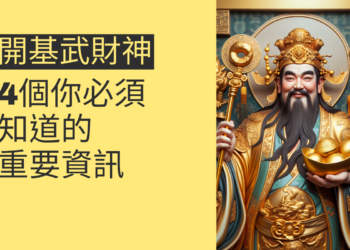
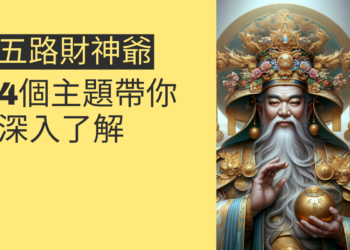
The civil god of wealth has an entirely different temperament. He’s usually shown in the dress of a court official: an official’s cap, formal robes, a ruyi scepter or a gold ingot in his hands, a friendly smile on his face. What he represents isn’t force but order, planning, credit, and steady long-term operation. In modern terms, the martial god is your VP of sales. The civil god is your CFO.
Splitting one subject between two different deities reflects a pretty nuanced observation about money: making it sometimes calls for a hard push and sometimes calls for patience, and those two capacities are genuinely not the same thing. So tradition handed them to two separate gods.
3. Why the Word “Civil”
In Chinese culture, “civil” — as in civil service — carries associations with study, institutions, ritual propriety, writing, and administration, standing opposite “martial,” with its associations of force, warfare, and conquest. Calling a wealth deity the civil god of wealth is therefore a statement in itself: wealth is something that can be managed, recorded, and sustained over the long haul through systems and honest dealing.
The word also points to a distinctly Eastern idea — money isn’t plunder seized by brute strength so much as an order that needs tending. Keep your books straight, keep your promises, pay people what you owe them in full, and wealth has somewhere to settle. Run things without any system, on the other hand, and treat people without integrity, and folk wisdom says that even a big haul today won’t stick around: such a person “can’t hold onto money.”
Where the Civil God of Wealth Came From: Two Real People Who Became Gods
The best part of any myth is usually the seam where it meets actual history. The civil god of wealth wasn’t invented out of thin air. Behind the figure stand at least two historical people with names and biographies, each one lifted into godhood carrying a completely different life story. One was a loyal minister whose own king had his chest cut open. The other was a merchant who gave away everything he owned — three separate times, after he’d already made it. Put the two together and you get a pretty clear picture of what Chinese culture thinks a person fit to handle money looks like.
1. Bigan: Only a Man With No Heart Can Divide Money Fairly
Bigan was a minister at the end of the Shang dynasty, and an uncle of King Zhou. In the legend, his habit of speaking plainly and correcting the king finally pushed that famously dissolute ruler too far. King Zhou had been told that a sage’s heart has seven openings in it, and he decided he wanted to see for himself, so he ordered Bigan’s heart cut out. That’s how Bigan died — of his own loyalty.
As a story, it ends in tragedy. But here’s where folk belief does something wonderfully strange with it: if Bigan no longer has a heart, then he can’t have a soft spot for anyone. A man with no heart won’t hand out more to the people he likes and less to the people he doesn’t. When he divides something up, it’s fair by definition. And so this loyal minister came to be seen as the one best suited to oversee the distribution of wealth, and became one of the faces of the civil god of wealth.
You can feel what’s underneath that turn. The deepest anxiety people have about money has never really been whether they have it — it’s whether the split was fair. Why does that guy who doesn’t work half as hard end up with more? Taking a minister known for his integrity, a man who by legend can’t play favorites, and putting him in charge of wealth is a way of parking a wish somewhere: let there be some logic to how this world hands money out.
2. Fan Li: He Gave Away His Fortune Three Times and Rebuilt It Three Times
The other figure identified with the civil god of wealth is Fan Li, from the Spring and Autumn period. He first served King Goujian of Yue, helping him win his state back, and the credit he earned was enormous — but once the victory was locked in, Fan Li walked away from politics. He’d seen something clearly: a ruler you can share hardship with isn’t necessarily a ruler you can share prosperity with. So he changed his name, disappeared into trade, and read timing and supply and demand well enough to build a huge fortune fast.
What happens next is the interesting part. The histories say he became immensely rich three times, and three times handed out his estate among relatives, friends, and people in need, then started over from nothing. The money went out; the relationships and the reputation stayed, and each time he earned it all back. He came to be known as Tao Zhu Gong, and generations of merchants since have treated him as the model.
Bigan stands for fairness. Fan Li stands for knowing how to let go. Between them, the two stories say everything the civil god of wealth is meant to say: money ought to arrive fairly, and it ought to leave in motion. In this worldview, the truly precarious person is the one who only ever takes in and never lets anything out.
The 3 Ideas Behind the Traditions: Circulation, Credit, and Sharing
Before we get into the customs, let’s set the ground rules. Everything below describes what people have traditionally done and why they did it. It isn’t a to-do list for you. For believers, these practices carry real religious weight. For everyone else, they carry a different kind of value, because sitting behind each gesture is an old piece of money advice. Strip off the ritual shell and what’s underneath is often surprisingly practical.
1. Why the tradition puts so much weight on circulation
Chinese thinking about money rarely treats it as a static heap. It talks instead about money energy — the idea that wealth behaves like a current rather than a pile. Qi, the vital energy that traditional Chinese thought sees moving through people and places, is supposed to flow. When it flows, things flourish. When it sits in one spot untouched, it stagnates. That’s the reasoning behind a long-held belief that money makes more money while it’s moving, and that the person clutching it hardest is the one most likely to get stuck.
Plenty of practices grow out of that idea. Some people hand out red envelopes to younger relatives and to elders at New Year. Some set aside a fixed slice of their income to help others. Some business owners make a habit of taking care of their partners first once the money comes in. In the language of belief, all of this is “sending your money energy back out.” In everyday language, it’s investing in relationships and investing in trust.
Here’s the part that often gets misread. Sharing, in the traditional sense, was never about earning a hundred dollars and giving ninety of it away. The emphasis falls on keeping the energy in motion, not on the size of the number. Telling a friend about a method that worked for you is sharing. Spending an afternoon volunteering is sharing. Money is one form circulation takes — not the only one.
2. Why credit counts for more than cleverness
Look at the customs surrounding the civil god of wealth and one theme keeps resurfacing: do what you said you’d do. When people made a wish, they traditionally paired it with a promise — how they’d give back if things worked out, what good deed they’d carry out. And the older generation almost always attached the same warning: better not to make the vow at all than to make it and never fulfill it.
On the surface that reads as a religious rule. In practice it trains a kind of character. Nothing scares a person in business more than someone whose word means nothing; one broken commitment can sour a relationship for decades. Folding the fulfillment of a vow into the belief system amounts to a very heavy reminder: if you can’t break faith with something you can’t even see, how much less with the person standing right in front of you.
Follow that logic and it becomes clear why the civil god of wealth is associated with steady earned income rather than windfalls. Money built through your own line of work takes time. It requires delivering, then delivering again, promise after promise. It’s compound interest on your credibility. At bottom, this whole tradition is nudging people to become someone who can be trusted with something.
3. Why the highest praise goes to making other people rich too
This is the most fascinating part of the whole civil god of wealth tradition. The old understanding holds that when a deity is willing to send money energy someone’s way, it’s an expression of trust — what he’s hoping for isn’t that you personally live well, but that you use the resource well and spread the benefit outward. Getting rich by yourself was never considered much of an achievement. Lifting the people around you as you go is what actually earned respect.
Folk tradition even puts it in blunt arithmetic: invest a dollar in someone who only looks out for himself and you get fifty cents back; invest a dollar in someone who passes his methods along and you get ten dollars back. A good idea leaving one person’s hands takes root in many, produces results in all of them, and some portion of that circles back to whoever shared it in the first place. That’s the snowball.
Take the deity out of it and the principle still holds today. Teach a coworker to do the job well and years later that coworker is someone who can help you. Pass a useful idea to a friend and the friendship gains a layer it didn’t have before. Wealth was never only the number in an account; it also includes how many people regard you as someone worth having around. For a thoroughly secular reader, that’s probably the piece of this tradition most worth carrying away — start seeing money as a set of moving relationships rather than a stationary stockpile, and your whole relationship with it changes.
5 Common Questions About the Civil God of Wealth
Once you’ve gotten this far, a few questions tend to bubble up on their own. Is this religion or is it culture? Can you engage with it without believing in it? And what’s the deal with Japan’s lucky cats? Here are the five that come up most, answered in plain English, so the names and the imagery don’t get in the way of understanding the tradition itself.
Q1: Is the civil god of wealth one specific deity, or a category?
It’s more accurate to call it a job description than a single person. “God of wealth” in English can point to different figures from different mythologies, and the Chinese civil god of wealth works the same way — it maps onto several historical figures, most commonly Bigan and Fan Li, with the details shifting from region to region and era to era.
That’s a defining feature of Chinese folk religion. There’s no single canonical text handing down an official roster the way an institutional religion would; the tradition accumulated over centuries out of local practice, with communities adding to it and borrowing from one another. So you’ll get different answers from different people, and nobody’s misremembering — the system was always built to hold multiple versions at once. Understanding it isn’t about memorizing names. It’s about seeing what values the role stands for.
Q2: Are the civil and martial gods of wealth rival camps?
Nope. Think of them as different positions in the same department — a division of labor, not a competition. The martial god of wealth stands for pushing forward and breaking through, which fits the kind of wealth that has to be fought for: higher risk, more contested, more aggressive. The civil god of wealth stands for planning and consolidation, the kind of wealth built slowly through expertise and a good reputation.
And traditionally, nobody expects you to pick a side. The common view is that you need both forces, just in different proportions at different points in your life. Starting out, you need the drive. Once things stabilize, you need systems and credibility. That maps closely onto how people talk about career arcs today — same idea, expressed in the language of deities.
Q3: I’m not religious. Is there anything here for me?
Yes, and probably more than you’d expect. Treat it as cultural material: how a civilization talked about wealth for several hundred years, and how it defined who deserves to have money. That’s genuinely informative on its own terms. You don’t have to believe Odin was real to read Norse mythology and come away understanding how that culture thought about courage and fate.
More concretely, the tradition around the civil god of wealth carries a few judgments you can use directly: wealth should circulate rather than sit in a pile, your reputation is the most expensive asset you own, and helping other people do well tends to come back around. You’ll find all of that in modern business books too. The difference is that this tradition carried those ideas through stories and rituals for centuries — and kept them alive longer than any book has.
Q4: Is this the same thing as Japan’s lucky cats or the Seven Lucky Gods?
Related, but not the same. Folk traditions across East Asia have influenced one another heavily — Japan’s Seven Lucky Gods include figures with Chinese and Indian origins, while the beckoning cat (maneki-neko) is a comparatively recent Japanese folk image with strong shopkeeper associations. They share a broad instinct: give the wish for abundance a concrete face.
The difference is emphasis. The beckoning cat is mostly about drawing in customers and good luck — friendly, immediately readable, no background required. The civil god of wealth comes attached to specific historical figures and a moral narrative about fairness, credibility, and knowing when to give money away. One is closer to a mascot; the other is closer to a set of values with a face on it. Putting them side by side actually sharpens the contrast in how different cultures imagine wealth in the first place.
Q5: When do people traditionally think about the civil god of wealth?
Lunar New Year is the peak. Welcoming the god of wealth is a widespread custom in Chinese communities, and in the early days of the new year people mark their hopes for the year’s finances in various ways. Businesses often use the same window to clean up the storefront, settle old accounts, and get ready to open for a fresh year. Beyond that, the milestones bring him to mind too: opening a shop, changing jobs, closing an important deal.
What’s worth noticing is that nearly all of those moments are restarts. The new year is a reset in time; opening a business is a reset in your working life. By anchoring a deity to those junctures, the tradition effectively hands you a reason to stop and take stock — to look back at how money came in and went out over the past year, and to think about who you want to become next. Set belief aside entirely and the habit still holds up: periodically stepping back to examine your relationship with money is worth something all on its own.